

Interview with
Ms. Isabel Maguire
General Manager

Isabel, could you tell us about the history of OBT. I understand that the company originally was started in Denmark? When did you start your company in Sierra Leone?
OBT was founded in 2004, with its very first offices established in Sierra Leone and Liberia. From the beginning, the company was built to operate in West Africa, drawing on the experience of Danish shipping professionals with deep regional knowledge.
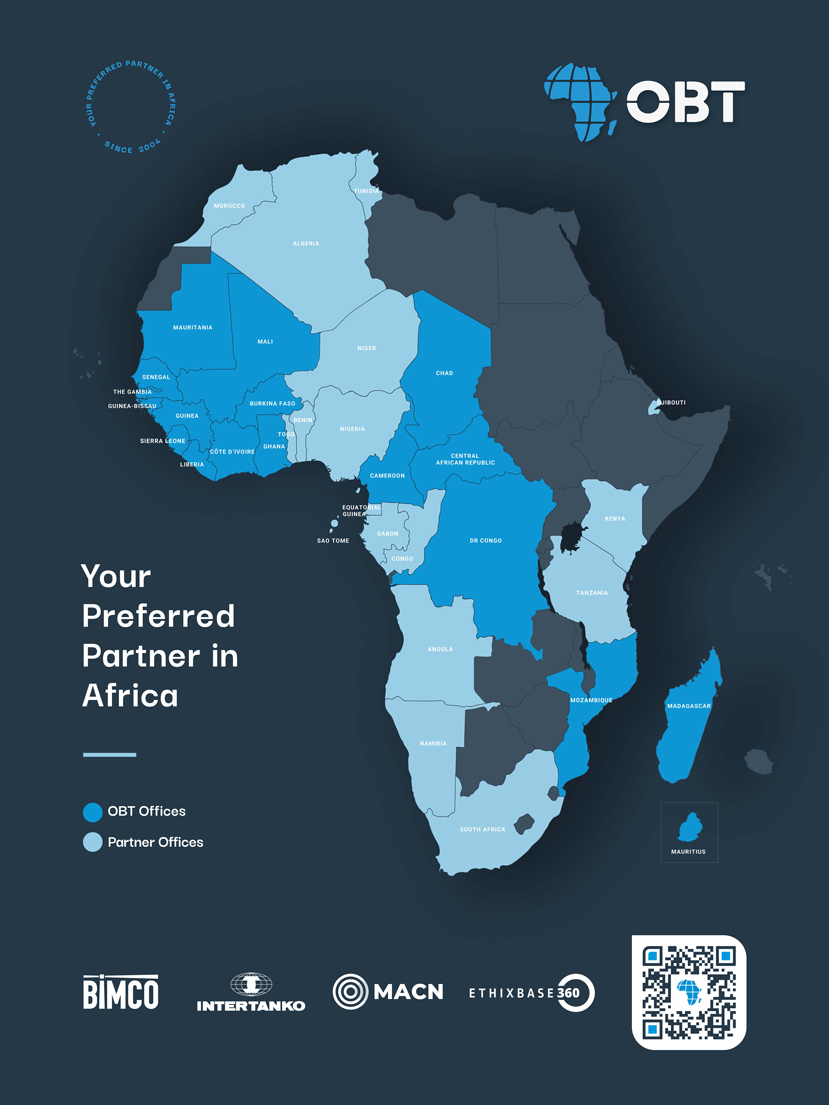
Sierra Leone therefore holds a special place in OBT’s history as one of the company’s founding locations. Over the years, OBT has grown significantly, expanding across West, Central, and now parts of East Africa, while maintaining the same core principles of strong local presence, compliance, and hands-on operational expertise.

Could you elaborate on the services you provide? Are you a freight forwarder, shipping agent, customs broker, or are you able to offer all services as a one-stop shop?
OBT operates as a full-scope maritime and logistics service provider and very much as a one-stop shop.
Our services include vessel agency and husbandry, freight forwarding by sea, air, and road, customs clearance, project and heavy-lift logistics, warehousing, and inland distribution. We have agents around the continent to assist with any origin requirements to maintain a one point of contact for our customers. We are also heavily involved in specialized sectors such as mining, energy, oil & gas, aid and relief, and large infrastructure projects.
What sets OBT apart is our strong on-the-ground presence and our ability to manage complex logistics chains end-to-end, under one coordinated operational framework. From pre-shipment planning and documentation to vessel handling, customs clearance, inland distribution, and final delivery, we manage the full logistics chain. This approach reduces risk, improves transparency, and gives our clients a single accountable partner for their shipments.
Can you tell our readers about some of the problems that you face regarding logistics in Sierra Leone? I suppose customs clearance and inland transport could be posing problems. Do you have good advice for overseas companies involved with shipments to Sierra Leone?
Like many developing markets, logistics in Sierra Leone comes with its challenges. Customs clearance can be time-consuming if documentation is incomplete or not aligned with local regulations, and inland transport can be affected by road conditions, weather, and infrastructure limitations.
The most important advice for overseas companies is preparation and local expertise. Good pre-advice, accurate documentation, realistic timelines, and working with a trusted local partner makes a significant difference. Early engagement allows potential issues to be identified and resolved before cargo arrives, which ultimately saves both time and cost.
The location of Sierra Leone in West Africa seems quite strategic. Can you tell our readers about the entry ports normally used for Sierra Leone? Are you also able to arrange transhipment to neighbouring countries or inland destinations?
Sierra Leone is well-positioned along major West African shipping routes. The main entry point is the Port of Freetown, which serves container, breakbulk, and project cargo and offers natural deep-water access.
From Freetown, we can arrange onward transport to inland destinations across Sierra Leone and also support cross-border movements to neighbouring countries, like Guinea and Liberia when required. OBT regularly handles multimodal solutions that include sea, road, and river transport, depending on project requirements and final destination.
Could you tell our readers something about some of the projects you have handled in or out of Sierra Leone or some of the vessels that you have cleared & handled?
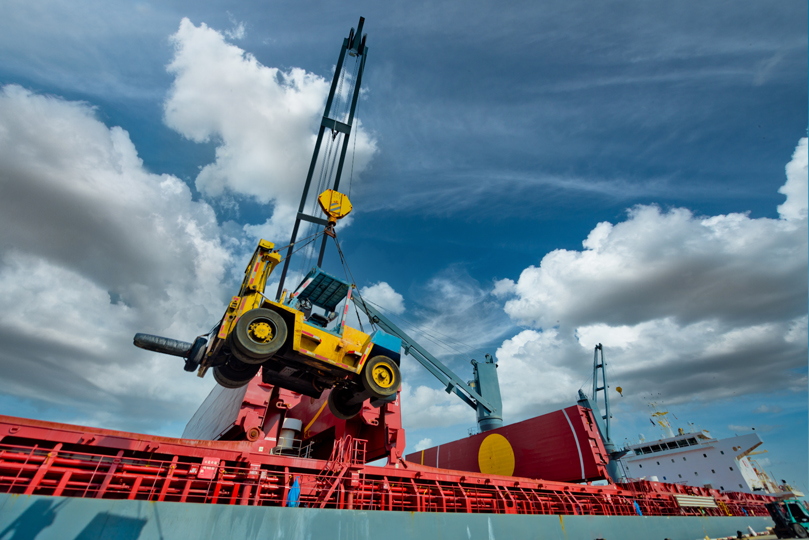
OBT Sierra Leone has been involved in a range of project cargo movements supporting sectors such as mining, construction, energy, and infrastructure development. This includes handling heavy equipment, oversized cargo, breakbulk shipments, and acting as the vessel agency for project-related calls. Recently, we have been involved with transit projects for Guinea, due to the congestion in Conakry and the critical supplies for the mines there. On a day-to-day basis, we assist major exporters for palm oil, fruit juice and cocoa with their supply chains, ensuring that the products get transported from their inland sites to the port and shipped to Europe, Asia, etc.
We have also cleared and handled vessels carrying construction materials, mining equipment, and industrial cargo, often under challenging conditions that require careful planning, coordination with authorities, and strict adherence to safety and compliance standards. We operate transshipment operations for the local mines, assist with crew changes and any other husbandry requirements. No cargo is too big (or small). 😉
Are there any particular shipping lines that you would recommend to use if our readers have any deliveries to make into Sierra Leone?
Rather than recommending a single shipping line, we advise clients to choose carriers based on service reliability, transit time, cargo type, and origin. We have several reputable global shipping lines serving Sierra Leone either directly or via transshipment hubs in West Africa.
At OBT, we work closely with multiple carriers and advise our clients on the most suitable option for their specific shipment, ensuring the best balance of cost, schedule, and reliability.
Which countries are the main trading partners of Sierra Leone?
Sierra Leone’s main trading partners include countries in Europe, Asia, the Middle East, and West Africa. Imports typically originate from regions such as the European Union, China, and other Asian markets, while exports include minerals and agricultural products shipped globally.
Trade within the ECOWAS (Economic Community of West African States -ed.) region is also increasingly important, supported by regional integration and infrastructure development.
How do you view the business prospects for the remainder of 2026?
We see cautious but positive prospects for the remainder of 2026. Infrastructure development, energy projects, and renewed interest in mining and construction are creating opportunities. While global economic uncertainty and cost pressures remain, there is clear momentum in sectors that require professional logistics support.
Companies that plan carefully and invest in strong partnerships will be best placed to benefit from the opportunities ahead.
How would it be best for our readers to get in touch with you?
We are always happy to engage with clients and partners. OBT Sierra Leone can be contacted directly through our Freetown office downtown, via phone +232 76692692 or email on ima@obt.dk, and we welcome enquiries by email or phone. You can of course also look on obt.dk to find all details for any of our offices.