
Interview with
Mr. Andrés Cadenas
Container Liner Service Manager

First of all, Andrés, can you tell us about how and when you started your own career in shipping leading up to your current position in Marguisa?
I started in shipping in roles that forced me to learn the business where it really matters: execution, customer trust, and the discipline behind documentation and operations. Very early on, I realized that shipping is not about promises. It’s about delivering, day after day, under real constraints.
Over time, I moved into leadership positions combining commercial ownership with operational accountability. Building solutions, managing complexity, and aligning multiple teams around one outcome.
At Marguisa today, my role is to connect strategy to performance. Protect reliability, reinforce our customer promise “delivering solutions that exceed expectations” and ensure our services keep improving as we consolidate and grow across different verticals in 2026.
Can you elaborate on the history of Marguisa Lines? When was it established? Who are the owners?
Marguisa was established in 1992. It was originally created to provide reliable maritime links between Spain and Equatorial Guinea at a time when consistency and commitment were critical in that trade.
From the beginning, our philosophy has been simple: reliability is not claimed, it is demonstrated, voyage after voyage. Over the years, Marguisa has evolved from a focused regional operator into a key shipping player in West Africa (WAF).
Today, we operate regular services in countries such as Equatorial Guinea, Cameroon, Gabon, Togo, and Sao Tomé and Príncipe, and we have built a strong reputation in these markets through operational discipline and long-term relationships.
Beyond our core liner services, through our semi-liner activities, we maintain presence and coverage across the African continent, enabling us to respond flexibly to project-driven and specialized cargo requirements.
Marguisa is part of the privately held Sea & Ports, a group of companies dedicated to the global maritime and port logistics industry, operating with a long-term industrial vision rather than short-term positioning.
With a deep expertise in transportation and logistics in traffic trades with Africa, the Group is present in more than 55 countries with over 100 offices worldwide, reflecting both our growth and our commitment to being close to our customers.
Our expansion has been deliberate and sustainable, focused on consolidating the services initiated in recent years, strengthening our operational backbone, and investing in digitalization to remain at the forefront of our market.
Could you tell our readers about the services provided and the type of tonnage you have in service and whether it is owned or chartered in?
Marguisa operates structured liner container services connecting key Mediterranean, Asian, North and East European gateways with West and Central Africa.
On the African side, our regular container services call ports such as Douala & Kribi (Cameroon), Libreville & Port Gentil (Gabon), Lomé (Togo), Sao Tomé (Sao Tomé and Príncipe), Malabo and Bata (Equatorial Guinea). These rotations are specifically designed around the operational realities of West African trades, where frequency, port performance, infrastructure constraints and cargo mix must be carefully balanced to ensure reliability.
In addition to our core liner services, through semi-liner activities we maintain a broader operational reach across the African continent, allowing us to respond flexibly to project-driven flows and specialized cargo requirements.
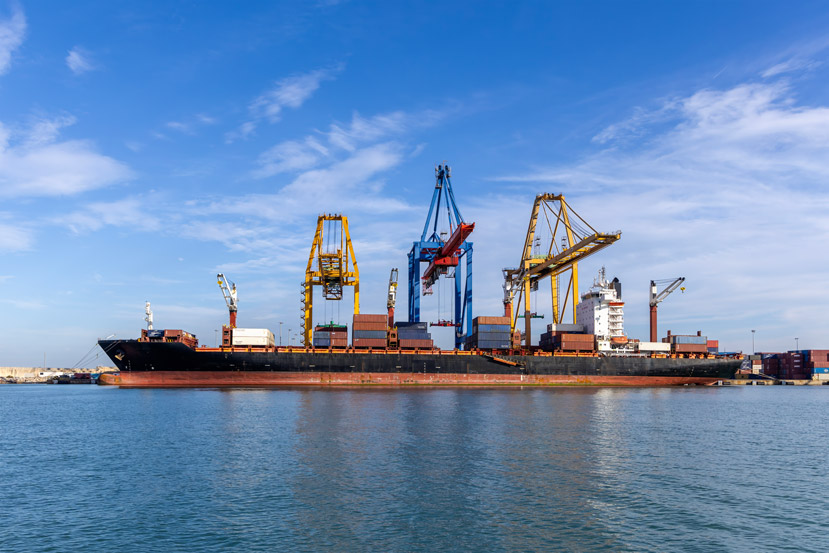
Regarding our fleet, we operate a versatile mix of feeder and mainline container vessels, carefully selected to match the operational profile of West African trades.
On one side, we deploy feeder vessels of approximately 200–250 TEU, particularly well-adapted to regional port constraints. These units provide a high maneuverability, a suitable draft for challenging port conditions, and operational flexibility for multi-port rotations. Finally, they provide greater adaptability where infrastructure or berth windows are limited.
On the other side, we operate larger container vessels in the 2,500–3,600 TEU segment, bringing scale advantages to the trade. These vessels allow us to offer a greater cargo intake capacity, improved slot efficiency and a competitive cost structure, in addition to a strong reefer capability for temperature-controlled cargo. Also, in certain deployments, a geared autonomy in ports with limited shore equipment.
As is standard in our segment, we deploy predominantly chartered tonnage, ensuring both structural stability and the flexibility required to adjust capacity in line with market demand.
Ultimately, our competitive strength lies not in fleet size alone, but in fleet sustainability, deploying the right vessel profile for each corridor, balancing operational resilience with cost efficiency, and ensuring consistent performance in complex West African environments.
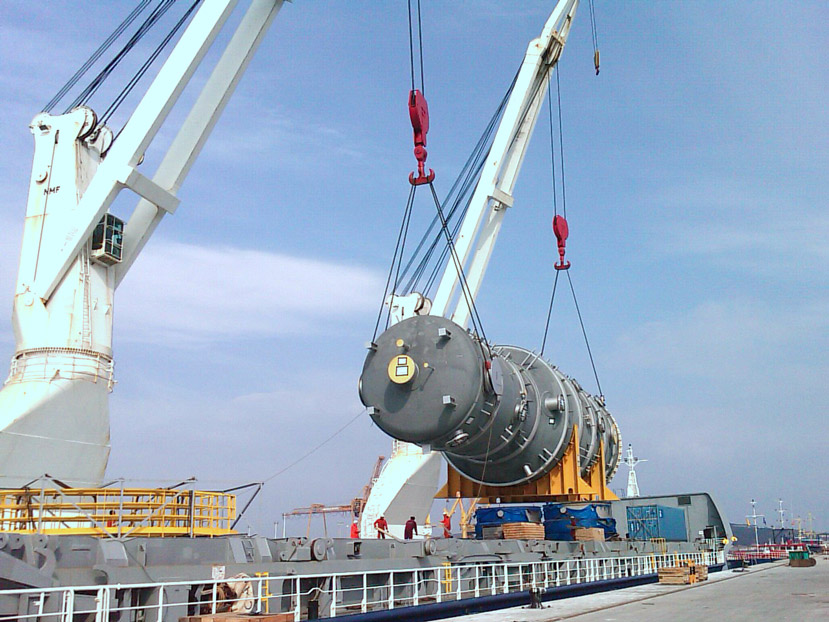
Do you have experience in handling oversized and project cargoes? I understand that you are cooperating with UHL (United Heavy Lift) as well in this sector.
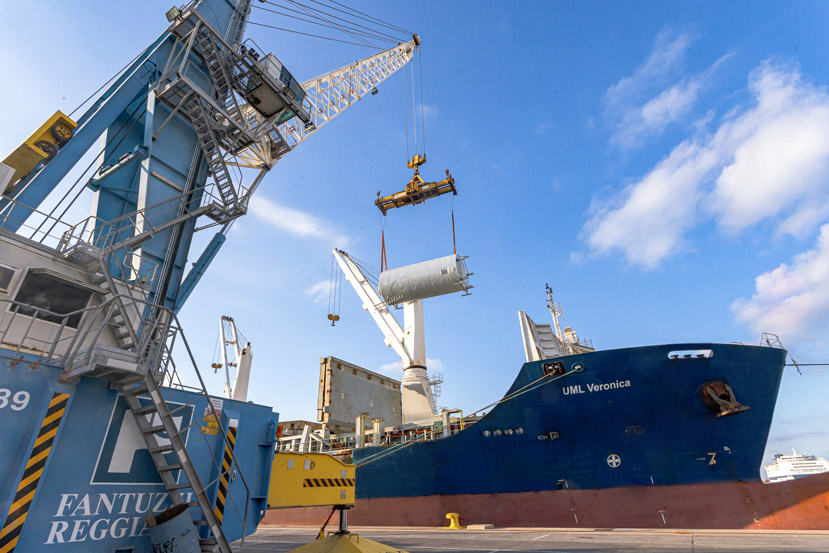
Yes, we have solid experience in oversized and project cargo, especially in Africa, where success depends on practical know-how regarding port constraints, execution planning, documentation discipline, and real coordination on the ground.
UHL was our partner under United Marguisa Lines (UML), but we maintain a close relationship and strong professional cooperation where it makes sense for the cargo and the customer.
What really strengthens our project capability is the combination of Marguisa Liner Service’s operational reach and network discipline, and UML’s multipurpose mindset and execution experience.
We are supported by a fleet profile that is more versatile than a standard “one-size-fits-all” carrier. Across Africa, we have supported complex movements linked to industrial and infrastructure supply chains, cargoes that require planning, measured risk management, and a team that can operate calmly under pressure.
That’s where Marguisa is at its best. Niche expertise, complex markets, and execution that customers can rely on.
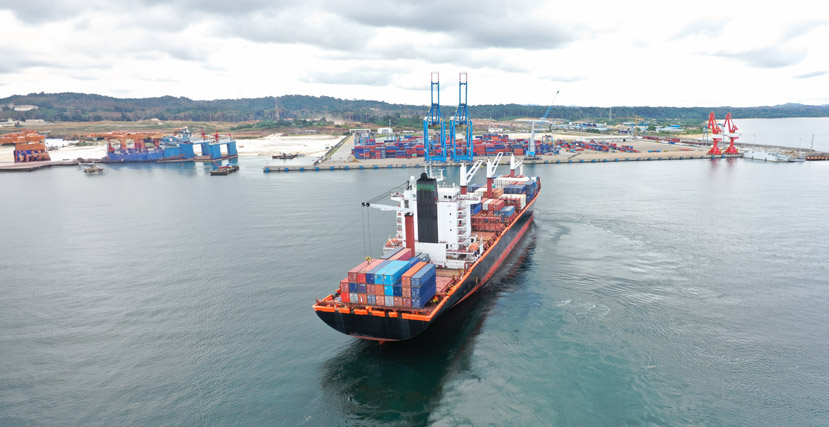
Having Africa as a market, how do you view this market’s future in 2026?
Africa in 2026 is not just a growth market. It is a structurally-decisive market for global trade. The continent continues to show strong demographic momentum, increasing urbanization, expanding middle-class consumption, and sustained infrastructure investment.
Initiatives such as the African Continental Free Trade Area (AfCFTA) are progressively reshaping intra-African trade flows, while strategic investments in ports, energy, and logistics corridors are strengthening long-term fundamentals.
At the same time, Africa remains a market where execution discipline is critical. Port productivity gaps, weather exposure, regulatory evolution, and infrastructure asymmetries require carriers that understand operational reality, not just network theory.
In that context, shipping companies are not merely transport providers, they are enablers of development. Reliable maritime connectivity supports food supply chains, industrial expansion, energy projects, and public infrastructure. It underpins economic stability.
Marguisa sees itself as part of that ecosystem. Our growth in West and Central Africa has not been opportunistic. It has been built on permanence, investment, and partnership. We operate regularly in countries such as Cameroon, Gabon, Togo, São Tomé and Príncipe, Senegal, and Equatorial Guinea, maintaining consistent services that contribute to supply chain continuity.
We are optimistic about Africa because we understand its complexity. Success here is built on operational discipline, long-term presence and strong local partnerships.
In 2026, as we consolidate our services and continue investing in digitalization, our objective is clear, to remain a reliable maritime partner supporting Africa’s trade growth and development with consistency and institutional commitment.
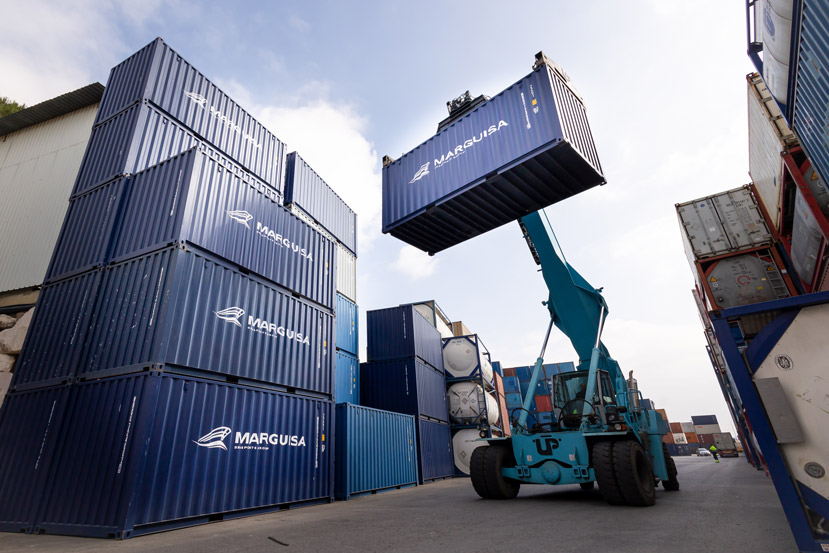
What is the policy of Marguisa Lines concerning freight forwarders? Some shipowners go directly to the customer. What is your stance?
At Marguisa, we do not see this as a binary choice between forwarders and Beneficial Cargo Owners (BCOs). We work with both, and we value both.
Freight forwarders are strategic partners, particularly in complex corridors such as West and Central Africa. They bring consolidation capability, documentation expertise, multi-origin coordination and operational problem-solving that are critical in these markets.
At the same time, we also work directly with BCOs, especially where long-term industrial flows require close alignment and tailored solutions. As a niche carrier, our focus is not on bypassing stakeholders, it is on adding value.
Our policy is based on transparency, respect for commercial relationships, and long-term cooperation. We do not build business by disintermediation; we build it by reliability and performance.
In complex trades, the most successful logistics chains are those where each party contributes its strengths. Our role is to provide stable maritime connectivity, operational discipline, and flexibility, whether the customer interface is through a forwarder or directly with a cargo owner.
Ultimately, our objective is simple: create trust-based partnerships across the entire ecosystem, because sustainable growth in Africa depends on collaboration, not fragmentation.
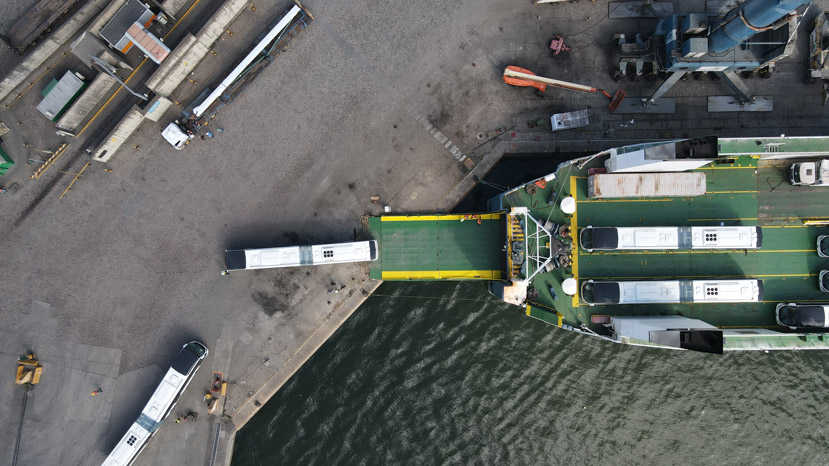
Can you accept SOC containers? Do you provide line’s units if needed?
Yes. We can accept SOC containers, subject to standard technical (CSC plates) safety and terminal compatibility requirements.
And yes, where needed, we provide carrier equipment, coordinated through our internal container and logistics organization to protect execution.
Our aim is to give customers practical flexibility while maintaining operational control and service reliability.
Where can our readers find your sailing schedule?
Our sailing schedules are available through our official channels, primarily the Schedules section on the Marguisa website, and also via our agency network, who can provide the most current updates aligned with operational reality.
Whom should our readers contact for rate inquiries, etc.?
For rate requests, routing options and bookings, customers can reach out to our commercial teams and local agents through the contact directory available on the Marguisa website.
Today, Marguisa is present in more than 55 countries with over 100 offices worldwide, which allows us to combine global reach with strong local proximity.
Behind every inquiry there is a real team: experienced professionals who understand the operational realities of the trade and are empowered to provide practical solutions.
We strongly believe in human accessibility. In complex markets like Africa, customers value being able to speak directly with decision-makers and operational teams who understand their cargo and timelines. That proximity is one of our strengths.
At the same time, we are deeply invested in digitalization. We are enhancing customer visibility, documentation flow and internal coordination through advanced digital tools, because technology should make processes smoother and more transparent.For us, digital efficiency and human closeness are not contradictory; they are complementary. Our objective is clear: be accessible, responsive and solution-driven, offering availability close to 24/7 across time zones, while maintaining the personal touch that defines our company culture.