
Interview with
Mr. Andreas Rolner
CEO

First of all, Andreas, tell our readers if you will, a little about your career in shipping. Why did you decide to enter into this line of business, and what do you particularly like about being in shipping?
Shipping has always been a part of my DNA.
I grew up in a shipping family and environment. As children, my siblings and I accompanied my father and mother on various business trips around the world. We were exposed to different cultures and countries from a very young age. This has definitely shaped me. I have always been drawn to the international aspect of the business.
During some of my summer vacations, I helped out in the office, running errands but also getting to know the shipping industry as such. I believe I made my first fixture at the age of 13 (although heavily assisted by the chartering team 😉). The client never found out about my age and actually called back years later to do another booking with me.
After finishing boarding school in Denmark, I started an apprenticeship with a shipbroker in Hamburg. It was a good start in shipping, but I knew that I wanted to explore the world. After completing my education, I got a job with Scan-Trans in Houston. I started off in the operations department, but I have always been drawn to chartering, and it didn’t take long before I was doing more chartering than operations.
After Houston, I returned to Germany as I took a job with SAL. However, it was only a short stint. SAL sent me to Singapore to open up shop. It was a lot of responsibility for a young guy but a great learning curve, and I still appreciate the trust placed in me back then.
As I had only ever been involved in shipping, I felt the urge to try something different, which is why I left shipping for another industry. It wasn’t a success, and I returned to shipping a few years later.
Could you elaborate a little on the history of United Shipping Group? I understand that you have several activities within the group.
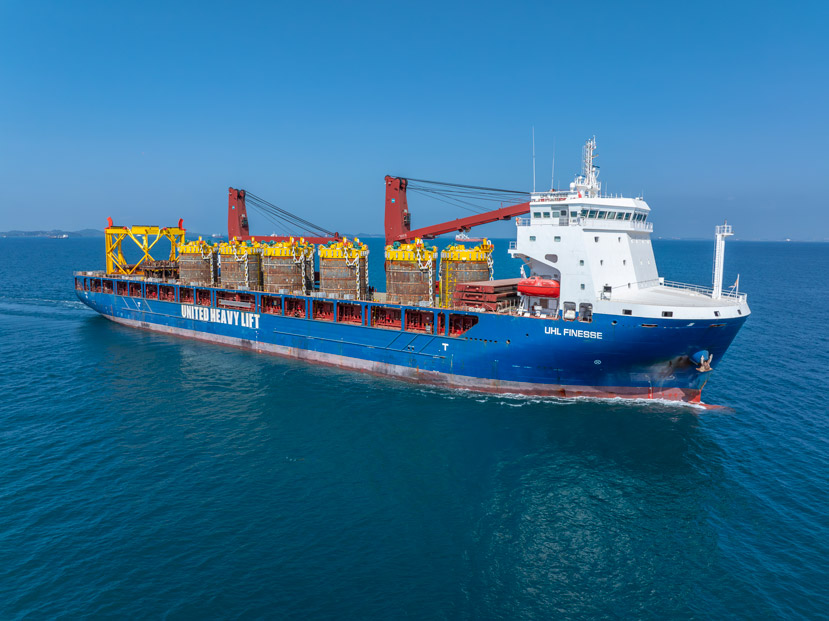
My father approached me at the end of 2014 and asked whether I would be interested in joining him to establish a new player in the MPP sector. He had ended his employment with SAL but was still hungry for more. When he stopped, he had been approached by various owners and banks who could not get their assets employed due to the poor market. The idea was fairly simple: “Unite” the somewhat distressed assets and employ them on a transparent, trustful, and open‑book basis on behalf of the owners.
I agreed to join, and we quickly amassed a fleet of MPPs. Within a few years, we purchased our own vessels and chartered vessels in as well. We launched United Engineering Solutions with some great minds and started to offer engineering services for clients and other owners. We developed logistical concepts for clients in order to optimize transportation costs and ended up designing and building deck carriers. Thinking outside the box and being opportunistic has been in our DNA since we launched, and all of a sudden, we had the commercial management of five semi‑sub vessels, which we managed very successfully for five years.
Our largest growth, and biggest gamble, came when we got our hands on the fleet of F900 Eco-Lifters after the insolvency of Zeamarine. A partnership was established with Zech Maritime, and we ultimately ended up with 19 F900s a few years later.
You have a very new fleet of geared vessels. Can you tell our readers about the actual size, lifting capacity, etc.?
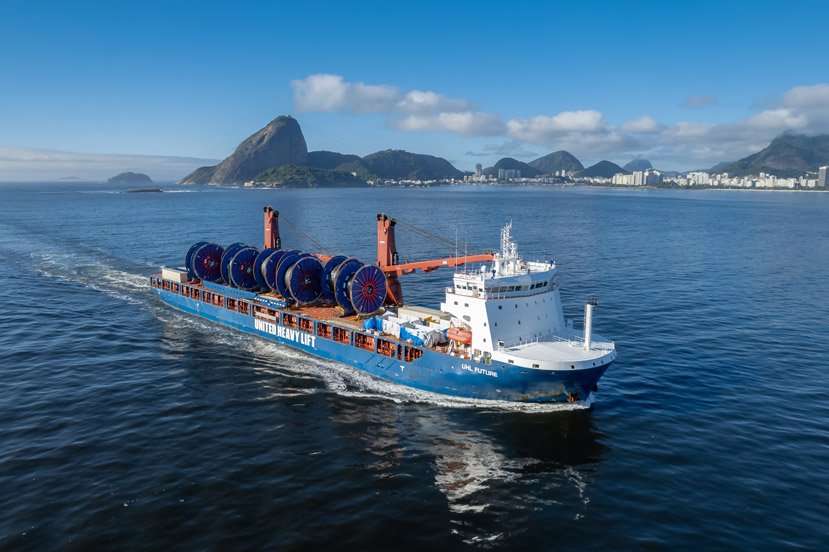
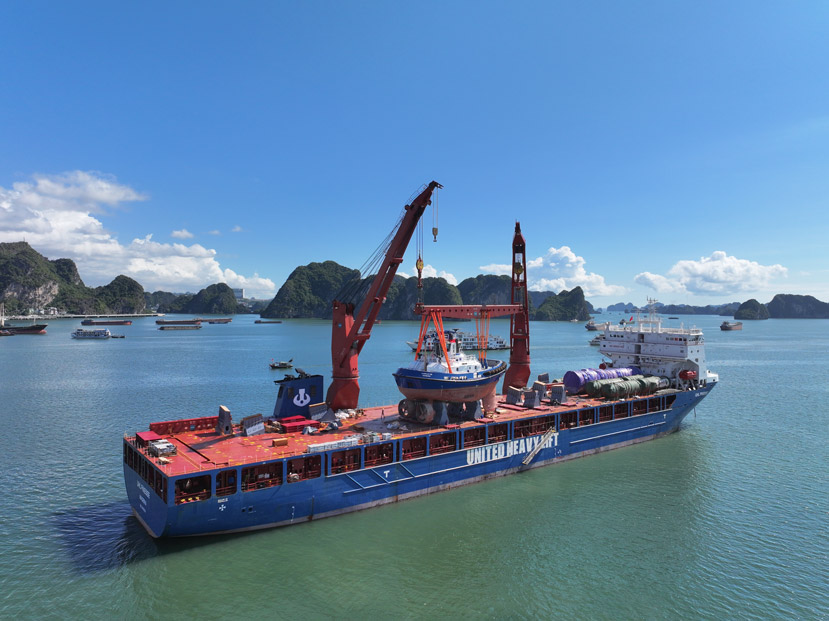
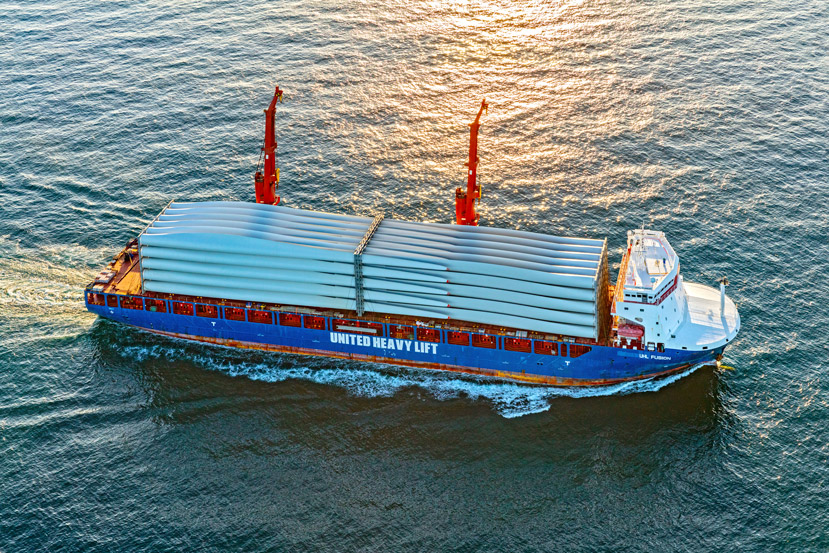
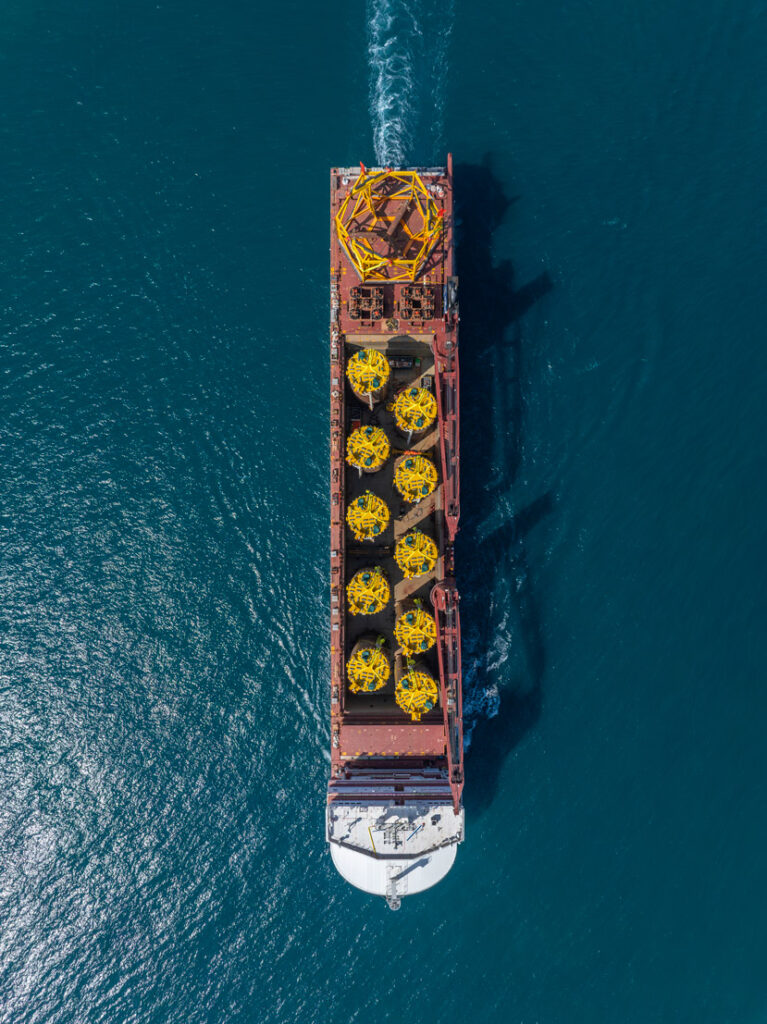
The core fleet consists of our 19 F900 Eco-Lifter heavy lifters. They are all nearly identical, which means that we can offer our clients a homogeneous fleet. We can be highly flexible when it comes to last‑minute schedule changes, and we do not have to redo the entire engineering. The vessels are fitted with 2 x 450 t heavy‑lift cranes and can offer up to 900 t combined lifting capacity. Although the vessels are fairly compact (149.99 x 25.6 m), they have a very large cargo intake. In particular, when it comes to renewable cargo, the vessels offer an almost unrivalled intake. Last but not least, the vessels have extremely low fuel consumption, which saves both money and emissions. Combined with the high cargo intake, this offers our clients very cost‑efficient sea transportation.
What is your policy concerning freight forwarders? As you know some owners (particularly container carriers) wish to do door-to-door and in effect, indirectly compete with the forwarders.
We do not have a policy when it comes to working with forwarders or not. We are not the ones to dictate how a cargo should be handled; this is up to the cargo owners. We have excellent relationships with both forwarders and shippers. It is not in our interest to offer inland transportation. We are specialists in port‑to‑port marine transportation.
Let’s turn to the Red Sea situation vis-à-vis transiting the Suez Canal compared to transit via the Cape. How is the situation nowadays for UHL?
Well, we were seeing the light at the end of the tunnel and were already having discussions about when we should consider transiting via the Suez Canal again. With what has happened in the Middle East over the last weeks, we will not be sending our vessels via Suez anytime soon.
Your head office is located in Hamburg. But you also have other offices scattered around the world. Could you provide our readers with an update? Also concerning your offices overseas, do they have the right to quote the freight locally or is that centralised?
Yes, our HQ is located in Hamburg’s HafenCity. From here, we liaise with our overseas offices and agents. Currently, we have offices in Japan, Singapore, Malaysia, China, Korea, Dubai, Italy, and the United States. Our overseas offices are authorized to quote freight in close collaboration with the HQ in Hamburg. The final booking authority, however, lies in Hamburg.
If you take a look into your crystal ball, what do you see for the years of 2026-2027?
For us in isolation, I see a steady year. Our fleet is almost fully booked/scheduled for 2026, which leaves little room for fluctuations.
For the market, I foresee a turbulent start to the year. However, every crisis in the last few years has typically had a positive impact on our segment. I believe in a positive market toward the second half of the year and an even stronger 2027/28.
It is my hope that our readers would be interested to contact UHL for a quote after reading this interview. To whom should they address their inquiries depending on their location?
Asia: Our team in Singapore
North America: Our team in Houston
Africa: Our HQ in Hamburg
Europe: Our HQ in Hamburg
Middle East: Our team in Dubai
All contact details can be found on the UHL website: www.unitedheavylift.com