
Interview with
Mr. DJ Kim
Managing Director
What can you tell us about the history and origins of Shin-Jo Logitech? Does the company name have a special meaning?
Shinjo Logitech was established in Busan in 1998 and is a project-specialized logistics company that has been steadily growing to this day. The meaning of the company name is as follows: “Shinjo” signifies trustworthy and helpful, while “Logitech” is a compound word of “logistics” and “technology,” signifying that the company is a specialized logistics firm based on professional technology rather than general logistics.
South Korea has a strong competition in freight forwarding. What are the strengths of Shin-Jo Logitech in your opinion?
In Korea, approximately 5,000 forwarding companies are fiercely competing.
Shinjo Logitech’s strengths for winning this competition are, firstly, that we do not rely on existing methods for the entire logistics process but constantly examine whether there are new approaches to create unique and competitive solutions. We apply this accumulated know-how to the entire process, from transportation planning to completion, to provide our customers with the most optimal solutions.
Secondly, our strength lies in the mindset of our team members, who work passionately with one heart toward the single goal of “customer satisfaction”.
What ports are mainly used in South Korea for handling project cargoes?
The main port for project cargo is Masan Port, and depending on the region of the exporter or importer, Ulsan Port, Gunsan Port, and Pyeongtaek Port are also major ports for project cargo.
Are you also able to arrange transhipment via Busan to other countries and or destinations?
Of course !
We provide transshipment services for a wide variety of cargo, including project cargo, through Busan Port or the various Korean ports mentioned above.
Our main transshipment destinations are small ports in Japan and China, or from small ports in Japan or China to Europe, Americas, or other regions.
The main transshipment cargo consists of small project/plant cargo, heavy / OOG cargoes, these are cargoes for which regular container or general cargo vessels are unavailable from the port of loading to the final destination, or for which chartering a vessel is difficult or too expensive.
Furthermore, the most attractive aspect of transshipment via Korean ports is the highly competitive logistics costs and well-established logistics infrastructure compared to other countries.
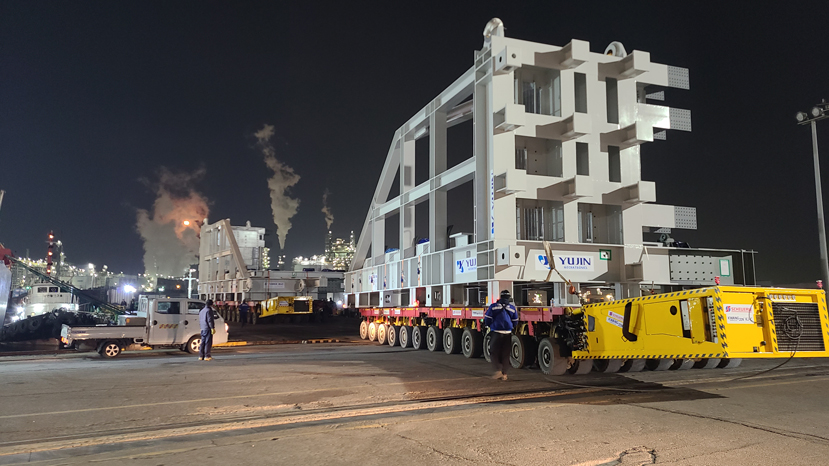
Could you tell our readers about some of the projects you have handled? Perhaps you are able to provide a few pictures as well?
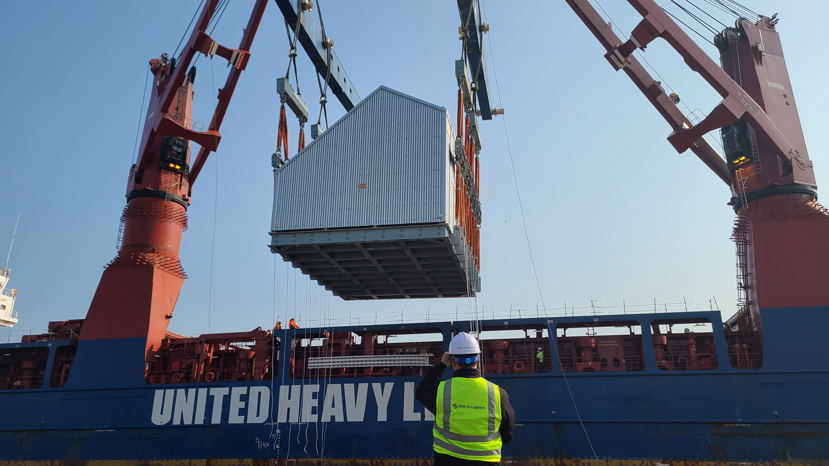
Although we have carried out many projects, the one we take pride in is the “ITER Project,” the largest research project in human history. We have contracted with the Korean government and have successfully transported a wide variety of sensitive cargo, ranging from small air cargoes sent from Korea to the site to heavy cargo weighing up to 600 tons, without a single setback from 2015 to now.
Some shipping lines prefer to run their own freight forwarding division. In other words, they are competing with the freight forwarders. Is that the same situation in South Korea? If so, how do you feel about the customer service offered by them to forwarders?
In Korea, rather than shipping lines directly competing with freight forwarders, some companies establish a separate, independent forwarding company to conduct sales in the market.
While direct competition with shipping companies is not yet significant, it is true that caution is required as competition could eventually arise.
The customer service provided by these shipping lines is almost identical to that of general shipping companies.
Are you currently a member of any international networks?
Currently, we are collaborating extensively with worldwide members as a member of several global projects networks, including the CLC Projects Network.
How do you view the rest of 2026 from a business standpoint?
As you know, due to unstable global issues such as wars in the Middle East and tariff wars, rapid oil price increases and instability across all industrial sectors are continuing. It is true that this situation is having a significant negative impact on the logistics market.
On the other hand, positive prospects for the logistics market can also be made, as the explosive growth of the green energy and AI industries is leading to the continuous expansion of related sectors and facility investments.
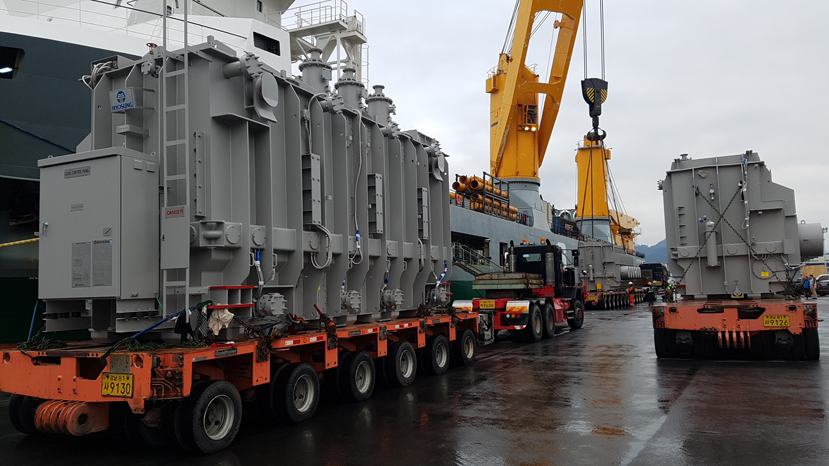
How would it be best for our readers to get in touch with you?
We are always ready to assist you with your logistics related to Korea.
Please feel free to contact our team at bos1@sjl21.com, and we believe you will receive the best solution you need.