
Interview with
Mr. Samir Ferguen
Managing Director

Please tell our readers about the background and history of UAL overall and also elaborate on the history and function of the Copenhagen office.
UAL has a long-standing history in Africa-focused shipping, with roots going back to the 1970s. Over the decades, the group has built a strong position in breakbulk, project cargo and containerised shipments, particularly for industries that require flexible and dependable transport solutions into challenging markets. Today, UAL is recognised for its practical, hands-on approach, its strong relationships across the African market, and its ability to combine liner services with tailor-made project solutions.
UAL Chartering, based in Copenhagen, was established to strengthen the group’s commercial and chartering activities, with a particular focus on Africa-related trades. From here, we support business development, cargo solutions, tonnage procurement, across a number of trades. The office also plays an important role in developing and maintaining close dialogue with clients, forwarders, brokers and owners, especially in the Atlantic region.
What are the main trade lanes of UAL?
UAL’s core activities have developed significantly over the years, with the group building a broad network focused on multipurpose and breakbulk shipping between Europe, the Caribbean, the US Gulf, South America and Africa. West Africa has always remained a key focus area for the group, but the trade has continued to expand in line with customer demand and market opportunities.
From UAL Chartering, one of the most important developments has been the Mediterranean and Black Sea to West Africa trade. Since 2020, we have maintained successful monthly sailings from the Mediterranean region to West Africa. In 2022, due to the close relationship between UAL and BOCS, this activity was formalised into a joint venture under the name UAL BOCS Shipping Line, or UBSL. This gave both companies stronger exposure to the Mediterranean and Black Sea region, while also creating greater fleet flexibility and wider service options for clients.
At the same time, the UAL & UBSL group has continued to broaden its service offering. Over the past 12 to 18 months, UAL has added monthly sailings to and from the US Gulf and South America, and UBSL with services from Europe to the North Coast of South America and the Caribbean. This reflects the group’s ongoing strategy of strengthening its core trades while expanding into complementary corridors where project cargo, breakbulk and liner demand continue to grow.
In addition, we have started our East Africa service, with a particular focus on Mozambique, with shipments from Europe.
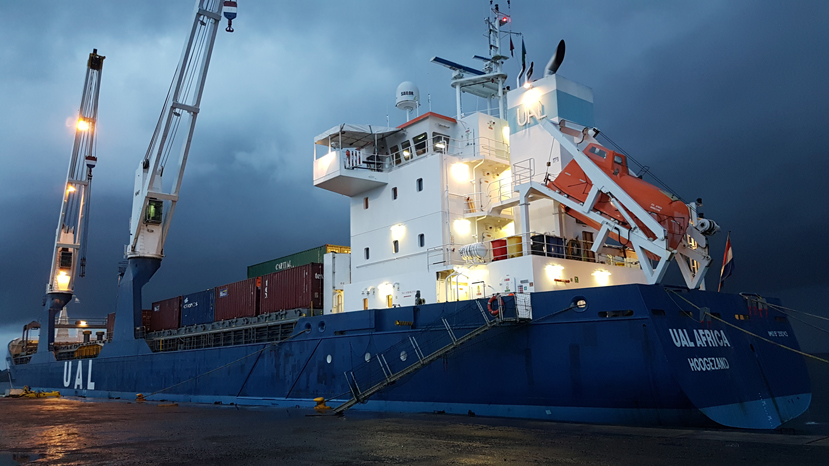
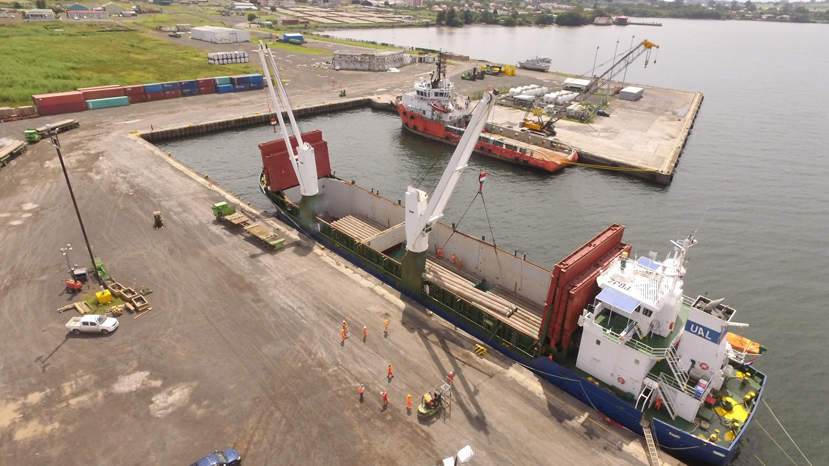
What type of vessels do you currently operate, what kind of lifting capacity etc and perhaps you could provide a few pictures?
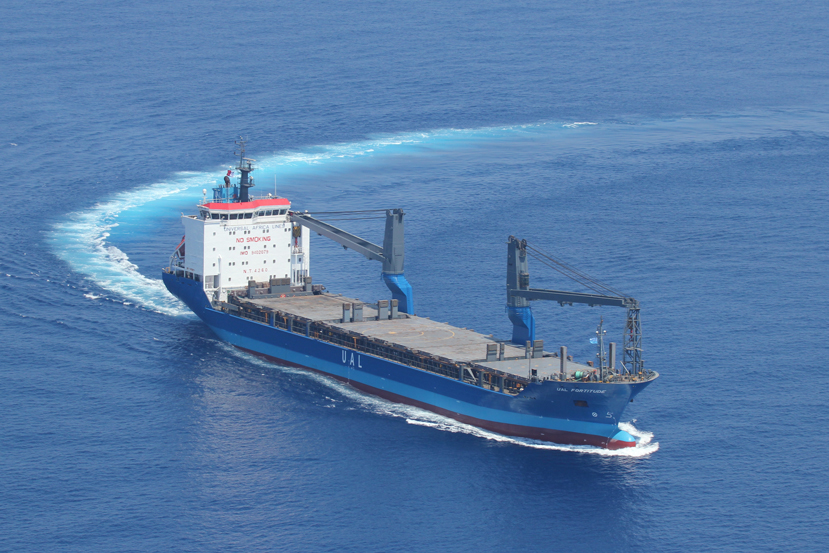
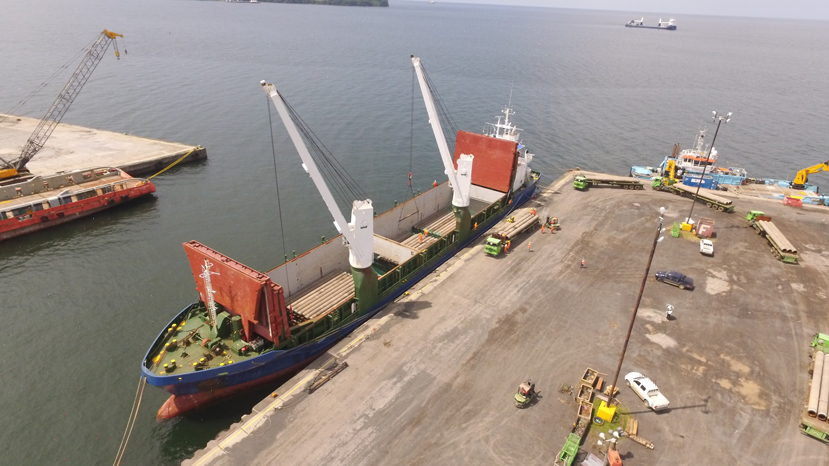
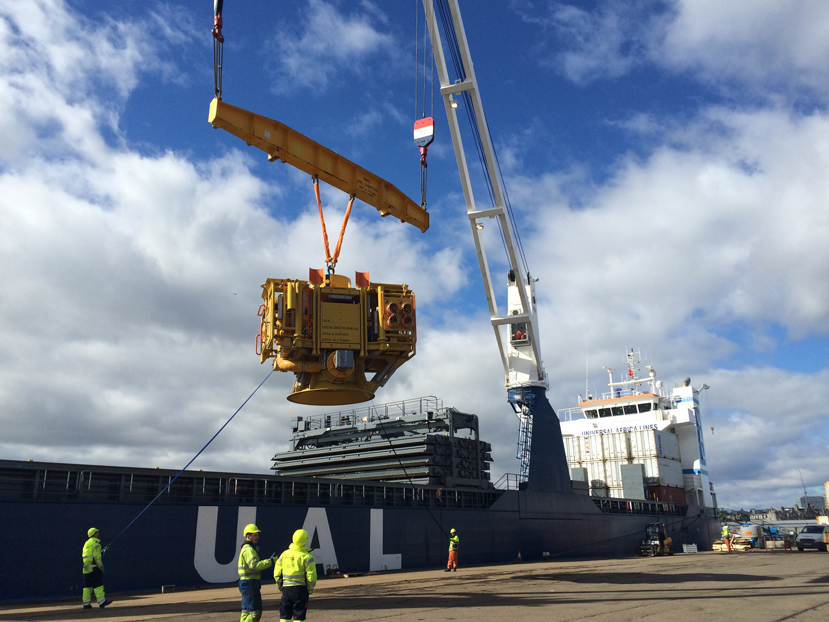
The UAL / UBSL Group and its related services operate multipurpose geared vessels suited for breakbulk, project cargo, containers and heavy-lift shipments. Across our established and chartered fleet activities, we typically work with vessel sizes in the range of approximately 8,000 to 13,000 DWT for many of our chartering requirements, with lifting capacities generally around 100 to 350 metric tons, depending on the vessel.
Through the broader UAL and UBSL setup, we also have access to a wider fleet profile, which gives us the flexibility to match cargo requirements with the right tonnage and lifting capability. This is especially important for project cargoes and shipments into ports where flexibility and ship’s gear are essential.
What is the policy of UAL concerning freight forwarders? As you know some shipowners prefer to work directly with shippers and will not be supportive to inquiries coming from freight forwarders.
Freight forwarders are an important part of the market and an important part of our business. We work with both direct customers and freight forwarders, and we see forwarders as valuable partners, particularly in project cargo, where coordination, technical understanding and local execution are critical.
Our approach is to be responsive, transparent, and commercially supportive, provided the inquiry is genuine and the cooperation is structured in a professional way. We believe long-term business is built on trust and consistency, and that applies equally whether the customer is a shipper, receiver, a forwarder, or an EPC.
Could you provide some details of some of the major projects you have handled?
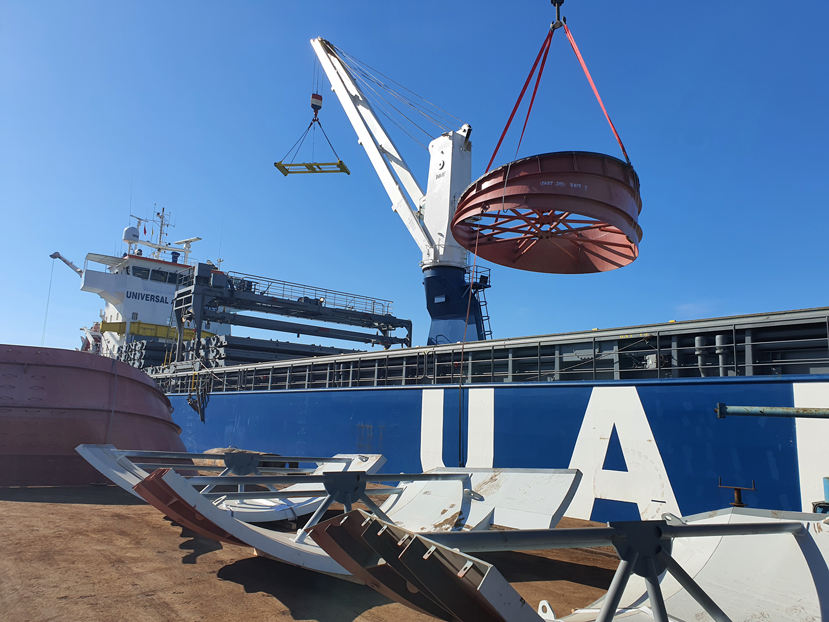
UAL has handled a wide range of projects over the years related to oil and gas, infrastructure, industrial development and general heavy transport into Africa and other emerging markets. UAL Chartering have been involved in developing both liner and chartering solutions for complex cargoes where flexibility, schedule reliability and local market understanding are essential.
Our strength is that we can support projects in different ways depending on the client’s needs. In some cases, we serve as a reliable logistics partner through the regularity of our liner services. In other cases, we provide more tailor-made tramp and chartering solutions where a project requires a bespoke transport setup. This combination allows us to offer both structure and flexibility across a wide range of cargo profiles.
Do you provide line containers in case of need or if not do you accept SOC? What about IMO 1?
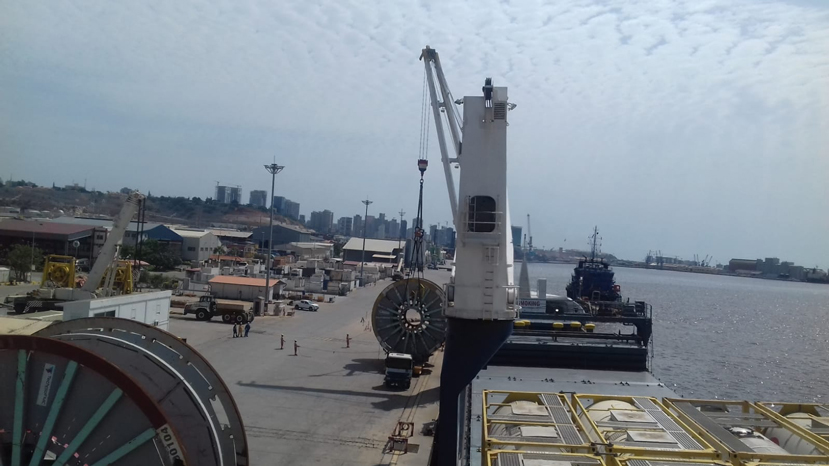
Depending on the trade and the specific shipment, we can offer container solutions where required, and we also accept SOC on suitable terms. We are accustomed to handling a combination of breakbulk, project cargo and containerised shipments as part of the same service environment.
With regard to IMO cargo, yes, the UAL / UBSL fleet is fitted to handle such. It’s of course always subject to the compliances which require review of shippers/receivers, cargo having proper documentation, etc.
Many (be it freight forwarders or shipowners) call themselves AFRICA experts. What in your view makes you qualify as being an “Africa Expert” — because as we all know, it is a large and complex continent indeed? What makes you stand out opposed to your competitors in your view?
First of all, Africa is not one market. It is a large and highly diverse continent, and in our view, no one should use the term “Africa expert” lightly. Each region, country and port environment has its own commercial realities, operational conditions and local requirements.
What I believe gives us credibility in this space is long-term presence, practical experience and continuity. UAL has been active in African trades for decades, and together with BOCS, we represent a very established background in the market.
At UAL Chartering, both Morten Moeller (Partner UAL Chartering) and I have spent most of our careers working in the project cargo and multipurpose sector, with Africa being a central part of that journey. That experience has taught us that success in Africa is not just about offering freight, but about understanding the ports, the infrastructure, the documentation, the cargo challenges and the importance of local relationships.
What makes us stand out is our long-term commitment and our approach to reliability. There will always be competition in the market, and healthy competition is welcome. But in the long run, customers need more than just an attractive freight level. They need a partner that can offer sustainable service, realistic solutions and consistent support over time. That is where we believe UAL stands apart. We combine market knowledge, operational flexibility and a genuine commitment to the trade, whether through liner services, tailored chartering solutions, or a combination of both.
For me, that is what real Africa expertise looks like: not simply calling the market “strategic,” but being present, understanding the complexity, and continuing to deliver through changing market conditions.
Are you also able to service intra-African destinations?
Yes, absolutely.
Intra-African cargo is very much part of the overall logistics picture, and we are able to support such movements depending on the routing, cargo profile and vessel positioning. This is strengthened by the fact that the UAL Group owns K5 Freeport & Oil Centre in Malabo, Equatorial Guinea, which serves as an important regional hub for cargo handling, transhipment and distribution in West Africa.
From K5, we are also able to support feedering solutions, which gives additional flexibility for cargo moving onwards between African destinations. That is an important advantage when clients require regional distribution or follow-on transport beyond the main line service.
So yes, we are certainly able to look at intra-African requirements and structure suitable transport solutions, whether through direct service, temporally storage or transhipment using the feedering service, depending on the cargo and destination.
We are soon midway 2026. Thus when you look into your crystal ball, how do you view the African market for the remainder of the year?
We remain cautiously positive for the remainder of 2026 across most of the trades we are involved in.
The market today is clearly more complex than it was a few years ago. The geopolitical situation around the Red Sea and Yemen continues to affect global shipping patterns, with many owners choosing to sail around the Cape of Good Hope instead. That naturally impacts vessel positioning, transit times and competition levels across several trades, particularly into West Africa.
At the same time, we continue to see solid activity within the breakbulk, multipurpose and project cargo sectors across the Atlantic region. This includes Europe, the Mediterranean, Black Sea, West Africa, East Africa, the US Gulf, South America and the Caribbean, where we have continued expanding our activities and service network over the past years.
For us, the focus remains on building sustainable and reliable services rather than reacting only to short-term market fluctuations. Freight levels will always matter, as they should, but customers today are also placing increasing importance on reliability, operational flexibility, realistic transit planning and working with partners who understand the trades they operate in.
We are encouraged by the continued development of our Mediterranean and Black Sea to West Africa activities through UBSL, and we also see positive momentum in our growing Atlantic trades, including the monthly sailings between the US Gulf and South America, as well as Europe to the North Coast of South America and the Caribbean.
In East Africa, it is also encouraging to see activity returning to Mozambique following the lifting of force majeure related to the LNG developments. Earlier this year, we resumed monthly sailings from the Continent into Mozambique, which we view as another positive sign for the region moving forward.
Overall, while we expect the market to remain competitive and operationally demanding during the second half of 2026, we remain confident in the long-term opportunities within the Atlantic and African trades where UAL and UBSL continue to strengthen our position.
Whom should our readers speak to at UAL if inquiries are from Northern Europe? What about the Mediterranean? Also Africa or Intra-Africa?
The commercial team at UAL Chartering, Copenhagen will make sure inquiries are directed internally to the right desk and service. E-mail: projects@ualchartering.com