
Interview with
Ms. Bianca Schiavone
CEO & Founder
First of all Bianca, please tell our readers about your career in shipping & logistics. Why did you choose this career?
I started my career in shipping in 2003, working for an Italian shipowner in chartering. After a couple of years, I moved into project freight forwarding with a Danish company, where I built my career over the years and eventually became General Manager.
What attracted me to project freight forwarding was the fact that no two shipments are ever the same. Every project involves different countries, different types of cargo, different transport modes and, very often, completely different challenges. You cannot simply apply the same solution every time. You have to study the shipment, understand the requirements and find the most suitable solution for the client.
I fell in love with the complexity of project cargo. I also really enjoy the international side of the business and the relationships that develop with people all over the world.
I am probably what you could call a bit of a control freak! I like organizing, coordinating and keeping control of the shipment from beginning to end. Every project brings challenges, and I enjoy finding solutions when things do not go exactly according to plan.
After many years in employment, I decided it was time to follow some of my own business ideas and build something of my own. That is how INVICTA Project & Shipping was born in February 2015.
What is the story of INVICTA, and why did you choose this name? Does it have a specific meaning?
When I founded INVICTA in 2015, it was a very small team. From the beginning, my objective was to build a company where customers would receive a very high level of personal service.
Project cargo is often high-value cargo, and it is frequently connected to a very tight project schedule. If the cargo does not arrive at the jobsite on time, the consequences can be significant. This means that every shipment is important and requires a high level of responsibility.
The name INVICTA was inspired by the Latin concept of invicta, meaning undefeated or unconquered. For me, it represents determination, organization, courage and the ability to overcome challenges.
That is how I see INVICTA. Every day we face challenges, sometimes very difficult ones, but we find a way through them. We may have a difficult battle with a shipment, but we come back stronger and successful.
Our company philosophy is very much based on this idea: determination, organization, courage and efficiency.
One of our biggest challenges as we have grown has actually been finding the right people… people who have the same drive, sense of responsibility and desire to make a difference.
Today, INVICTA is an established, project freight forwarding company working worldwide. We work directly with engineering and procurement companies and have developed strong, long term relationships with partners, shipowners, carriers, transport companies and terminals around the world.
Logistics is a wide field. What is your speciality, and what, in your opinion, makes you the one to contact first?
Our speciality is project freight forwarding and project logistics.
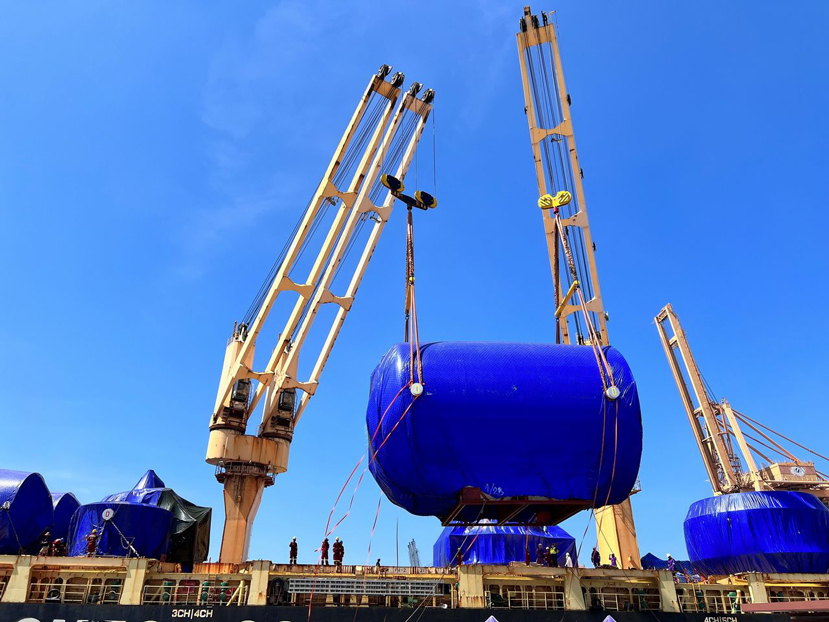
We handle a wide range of cargo, including industrial machinery, energy equipment, construction equipment, steel, oversized and out-of-gauge cargo and breakbulk. We provide worldwide solutions and can manage door-to-door, RoRo, heavy lift, multimodal and other transportation requirements, including air freight when necessary.
Our strongest markets at the moment include the Middle East, Far East and Central America, although our projects are truly worldwide.
I believe our biggest strength is our people and our relationships. Many of the relationships we have with clients, partners and carriers go back more than 20 years. In project logistics, that is extremely valuable because you need to know who you can rely on when a problem occurs.
Problem solving, technical knowledge, speed and attention to detail are all very important to us.
Our customers regularly tell us that they are very satisfied with our service, particularly because they are kept updated throughout the shipment. We believe communication is essential.
I am also personally involved in both the commercial side and the operations. Customers can come directly to me. I am approachable and I want to remain close to the business.
For me, INVICTA is a guarantee in shipping.
Could you provide our readers with a few examples of project cargoes you have handled?
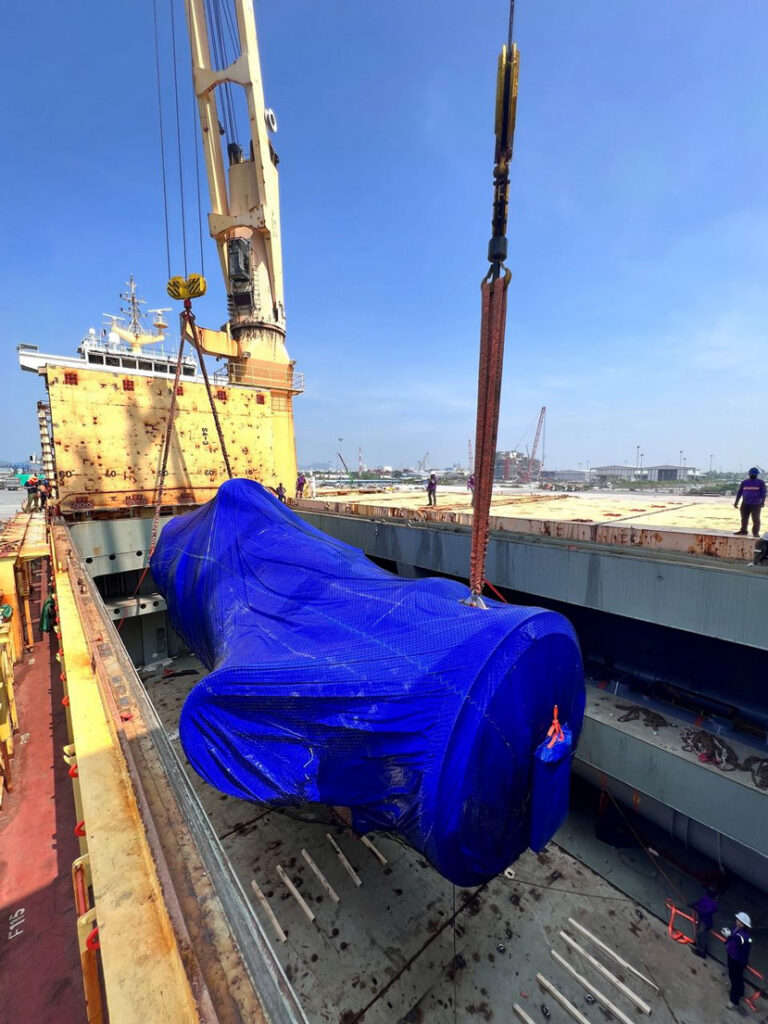
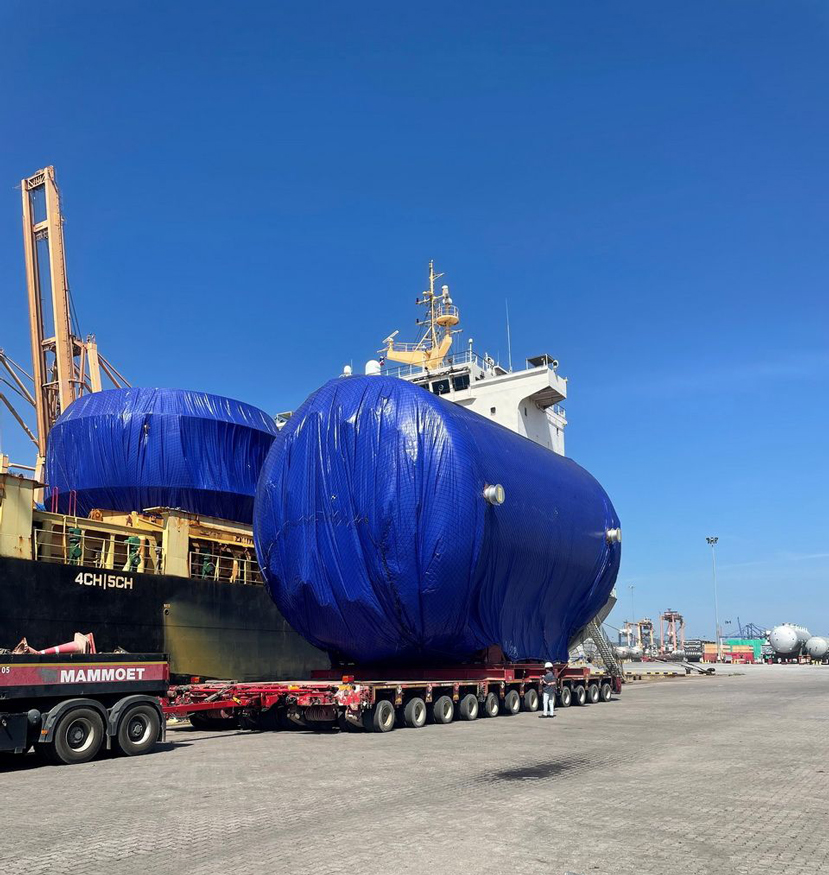
One shipment that I remember particularly well was a breakbulk shipment from Laem Chabang in Thailand to Arzew in Algeria. The shipment consisted of approximately 200 units, with a total volume of 18,308.21 CBM and a total weight of 2,065,079.31 kg. The heaviest unit weighed 152 tonnes, and the cargo was transported on an MPP vessel.
What made this project particularly challenging was that it took place during the COVID period. The loading operation itself lasted almost five days, and I was personally there throughout the operation, working day and night with the team.
In project cargo, you cannot simply say that something is a problem and wait until Monday morning to deal with it. You have to be there, monitor what is happening, and make decisions when they are needed.
In the end, everything went perfectly. In fact, the vessel arrived a couple of days earlier than expected, which was a nice bonus and, perhaps, we had a little tailwind on our side!
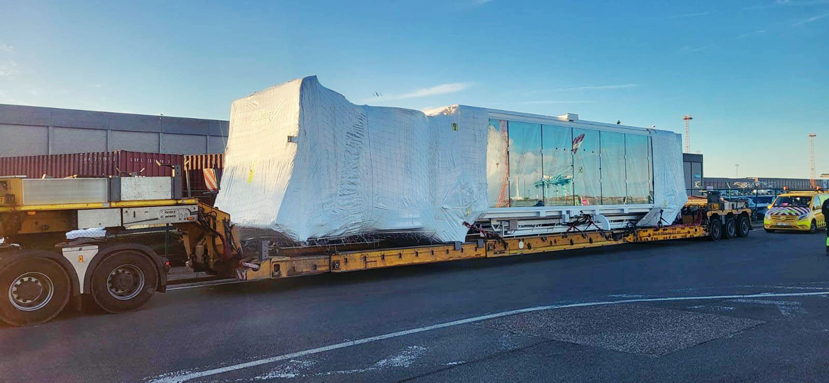
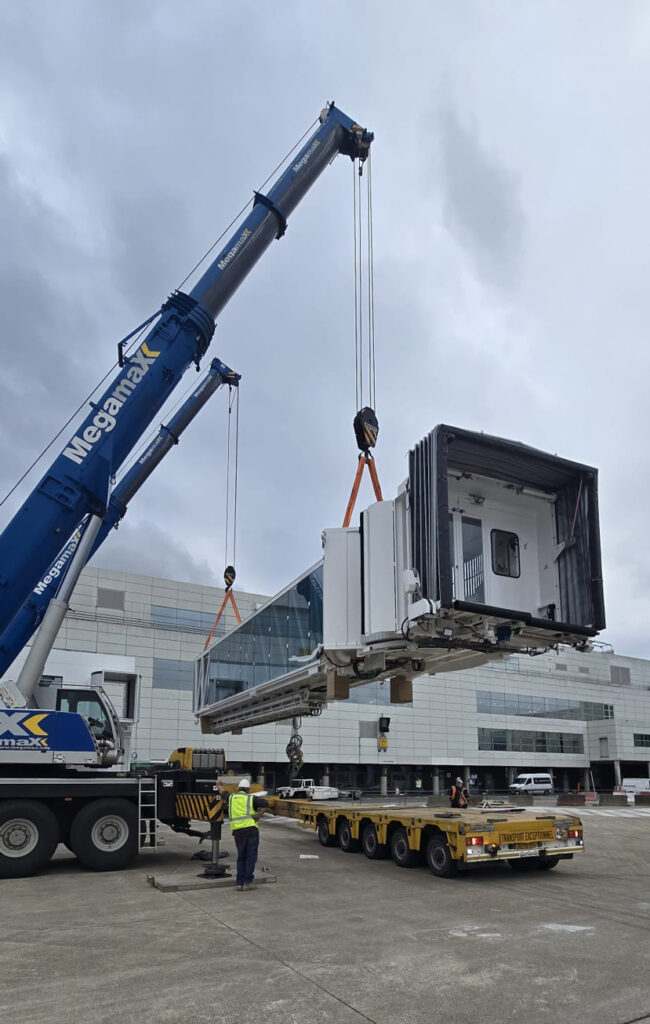
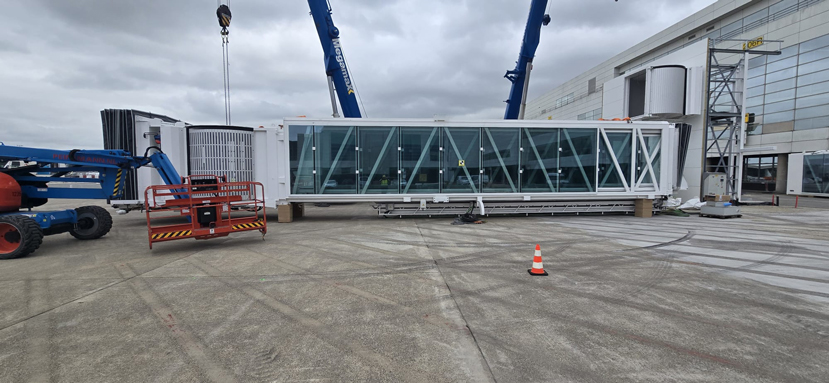
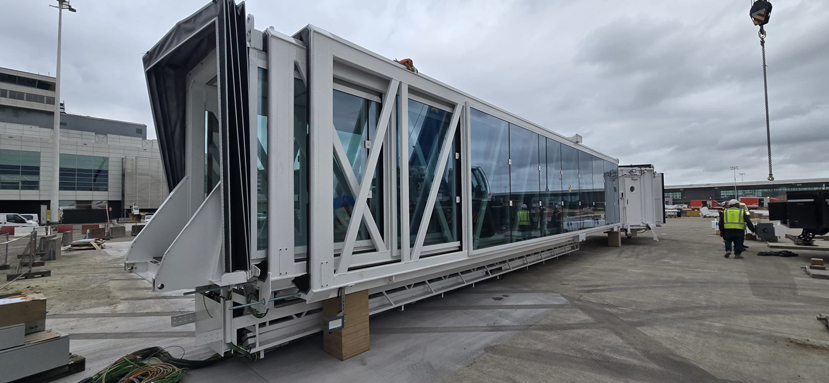
Another recent project involved the transportation of five passenger boarding bridges for the Brussels International Airport. This was another interesting project requiring careful coordination of the transport chain.
These are the types of projects we enjoy: complex shipments where planning, coordination, and attention to detail really make a difference.
Nowadays,some shipping lines wish to cut out the middle man (freight forwarders)? What is your opinion about that? Does that happen in Italy as well?
Yes, I believe shipping lines are increasingly trying to work directly with cargo owners. From my experience, however, I see this more often with general cargo than with complex project cargo.
Project cargo requires a very high level of service and involvement. There are no real weekends or days off when you are responsible for a complicated project. Something can happen at any time, and somebody needs to take responsibility for finding a solution.
A carrier provides an essential part of the transportation, but a project forwarder coordinates the complete solution and remains focused on the customer’s specific requirements.
There is also an important element of commercial confidentiality. Quite often, when we ask carriers for a freight quotation, the first thing they want to know is the identity of the shipper. We are very careful about protecting this information and protecting our customers.
For complex projects, I believe there will always be a strong role for specialist forwarders who understand the cargo, understand the project and can coordinate all the different parties involved.
Customer service from the owners is, in some cases, virtually non-existant. That is what we hear from around the world. How do you find the service level provided these days towards the freight forwarders?
Unfortunately, I believe the quality of service from some carriers has deteriorated significantly in recent years.
The biggest change I have noticed is the loss of the personal relationship. It can be increasingly difficult to speak directly to somebody who understands your business and has the authority to help you solve a problem. In some cases, customer service has been moved to ‘third-world’ countries, and this can make communication and flexibility much more difficult.
For project cargo, that is a real issue. If I have a problem with a shipment, I want to be able to call somebody who knows me, understands the project and is prepared to help find a solution.
Fortunately, there are still carriers where we have very good relationships. We work particularly well with Hapag-Lloyd, Maersk and CMA CGM, where we still have personal contacts with key people.
For me, good service means being able to pick up the phone when there is a problem and speak to a salesperson or senior manager who will engage with you and help solve it.
That personal connection is extremely important in project logistics.
How do you feel about the market in Italy currently? I have also noticed that you’ve got an office in Antwerp. Does it mean that you provide solutions out of Benelux as well?
I am quite optimistic about the Italian project cargo market. We are seeing increasing activity, particularly in industrial machinery, energy, renewables and oil & gas, and I see more opportunities ahead.
Having an office in Antwerp is strategically very important for us. I was born and raised in Belgium, so having a presence there was also a natural decision for me. Antwerp gives us access to a significant number of projects and shipments in Northern Europe and allows us to be physically present closer to customers and cargo flows in the Benelux region.
For INVICTA, Genoa and Antwerp are a very strategic combination. They give us strong positioning in two important European logistics markets while allowing us to continue providing worldwide project logistics solutions.
Are you currently a member of any international networks? If so, does it make sense and add value to your business?
Yes. We are members of Cross Ocean and LARGO+, which are both specialist project logistics networks and, for us, the most important networks for our project cargo business.
We are also part of Cargo Power Network, which has a broader focus across the freight forwarding industry and gives us access to a wider range of reliable partners worldwide.
For us, the value of being part of a network is not simply having a list of companies in different countries. What really matters is knowing the people behind those companies and building relationships based on trust, reliability and a shared commitment to service.
We receive business from our network partners, but we also give a significant amount of business to them. It is a genuine two-way relationship.
In project cargo, having a trusted partner on the ground in another country is extremely important. When you are managing a complex shipment thousands of kilometres away, you need to know that the local partner will take ownership, understand the requirements and handle the operation with the same level of attention that you would expect from your own team.
That is where a good international network really adds value. For me, it is about people, trust and long-term relationships, rather than simply having a network logo on your website.
Looking into your crystal ball for the remainder of 2026 and 2027, what do you see?
I am optimistic about 2027.
I believe project cargo will continue to increase and become even more important. Industrial investment, energy projects, renewables, infrastructure and other large-scale developments will continue to generate demand for specialist project logistics.
At the same time, I am concerned about the geopolitical situation. The world has become more complex, and geopolitical developments can quickly change trade routes, shipping patterns, costs and project schedules.
For project forwarders, this creates challenges, but it also reinforces our importance.
The more complex the logistics environment becomes, the more customers need specialists who can understand the entire picture, anticipate problems and find alternative solutions.
So I see challenges ahead, but also significant opportunities for companies like INVICTA.
How would it be best for our readers to get in touch with you?
Readers can contact me directly through INVICTA Project & Shipping.
Website: https://invictapns.com/
Email: bianca.schiavone@invictapns.com
INVICTA has offices in Genoa, Italy and Antwerp, Belgium, and we provide project freight forwarding and logistics solutions worldwide.