
Interview with
Mr. John Aage Nielsen
CCO

For starters, John, what can you tell our readers about the history, background and purpose of Royal Arctic Line (RAL)?
Royal Arctic Line was established in 1992 and began operations in 1993, but our maritime roots in Greenland go back more than 200 years through KGH and later KNI. Today, Royal Arctic Line is 100% owned by the Government of Greenland. Our core responsibility is to provide reliable sea freight services to, from, and within Greenland. In many ways, we are part of the country’s critical infrastructure: we connect communities across Greenland with each other and with the rest of the world, while supporting both imports and Greenlandic exports.
What ports in Greenland do you mainly call, and how about in Europe? Are you having any joint sailings with other carriers?
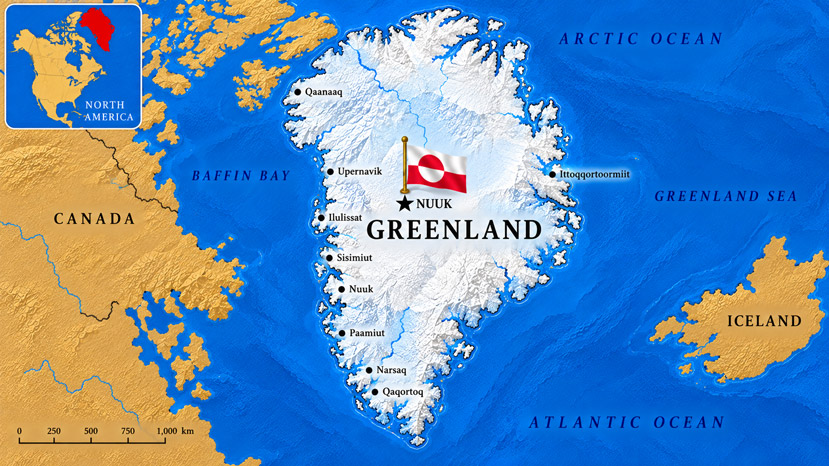
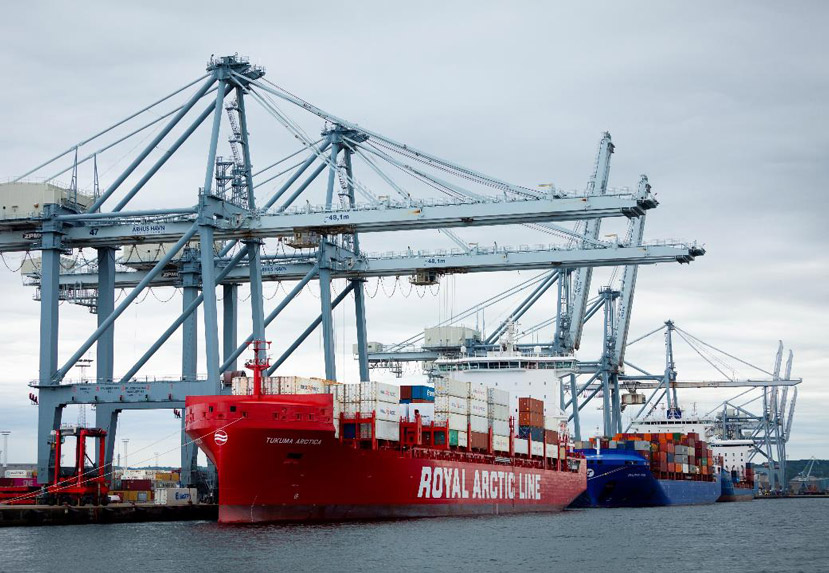
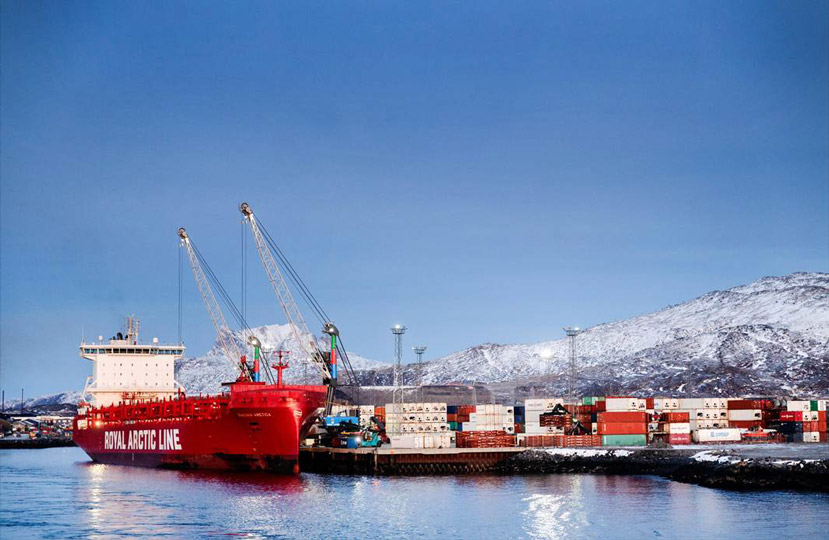
Our network covers towns and settlements along the Greenlandic coast. Our main port is Nuuk, where the main liner starts and ends, supplemented by feeder and settlement services that distribute cargo further along the coast. From Nuuk, we feeder out cargo up north and down south, the east coast is serviced by Tasiilaq as mainport from Iceland. In Europe, Aarhus is an important gateway for us, and our wider network also provides connections to markets including Iceland, Germany, the Faroe Islands and Sweden. We currently have a Vessel Sharing Agreement with the Icelandic carrier Eimskip, which has helped provide regular international connections and access to a wider network.
Logistics is a big thing for an island, not least the size involved when talking about Greenland. Land operations: is that also something that RAL gets involved in; I mean transport to and from the vessels?
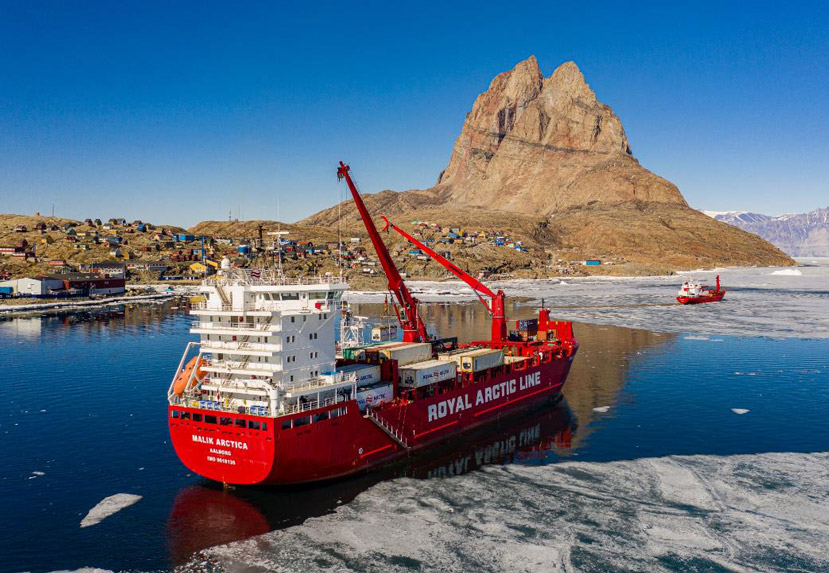
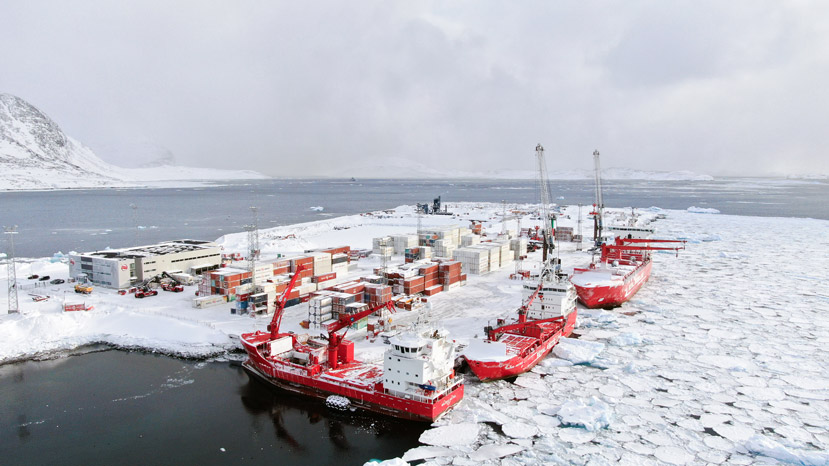
Yes. In Greenland, shipping cannot really be viewed separately from the landside operation. Royal Arctic Line operates and works through port terminals around the country, and cargo handling, warehousing and the coordination between vessel and shore are important parts of the overall supply chain. Depending on the shipment and destination, the final logistics solution may involve several steps and partners, so good planning from origin to final destination is essential.
When did you start your own career in shipping, and what originally led you to this career?
I joined Royal Arctic Line in 2020 as Key Account Manager. In 2021, I moved into the role of Head of Customer Services, covering Customer Support, Key Account Management and our export activities for Greenland’s fishing industry. In 2023, I stepped into the CCO role.
I came to shipping after 13 years as a police officer in Greenland. I had always imagined that, at some point, I would move into a more commercial career, but the police offered so many interesting areas and challenges that the years passed quickly. Eventually, I decided it was time to try something new and take more ownership of the direction of my career. Ironically, that plan did not last long either—in Royal Arctic Line, I was encouraged to take on greater responsibility several times, which ultimately brought me to where I am today.
Whom would it be best for our readers to talk to in Denmark and Greenland if they have a freight inquiry?
The best starting point is Royal Arctic Line’s customer and commercial organisation. We have teams in both Greenland and Denmark that can guide customers depending on whether the shipment is ordinary liner cargo, project cargo or requires a more tailored logistics solution.
- Daily use: Bookingaalborg@ral.dk and booking@ral.gl
- Project cargo and charter ATT: Esper Boel
The whole political issue about Greenland in recent months has of course awoken the world to the name of Greenland. Can you see an increased activity already now concerning transport and logistics?
There is certainly significantly more international attention on Greenland and the Arctic, and we are seeing growing interest in logistics linked to infrastructure, large projects and resource development. We are also following potential new activity connected with large projects and infrastructure closely. That said, attention does not automatically translate into cargo overnight; major projects take time to mature. Our role is to be ready when they do, with safe, reliable and practical Arctic logistics solutions.
And connected to the question before, how would you view the remainder of this year and 2027 from a RAL business perspective? Positive? Negative? Lots of cargo to be handled?
I would describe our outlook as cautiously positive. Greenland’s freight volumes are closely linked to activity in the wider economy, and we experienced softer volumes in 2025. At the same time, there is considerable potential from infrastructure, mining and other large projects, as well as new Arctic logistics opportunities. For Royal Arctic Line, the focus is therefore both on maintaining a reliable supply chain for Greenland and on developing business opportunities that complement our core operation.
Any particular word of advice to anyone having a delivery to make to Greenland concerning logistics?
Plan early and talk to people who understand Greenland. Distances are vast, communities are spread across a very large coastline, and weather and ice remain operational realities. The right container or cargo solution also matters because handling capabilities differ between destinations. If a customer involves us early, we can help identify the best routing, sailing and handling solution and reduce surprises later in the transport chain.
I have heard that Greenland is a beautiful island. Our viewers may also be tourists. What spots would you recommend that they visit if they have such intentions?
That is probably the hardest question because Greenland offers very different experiences depending on where you go. Nuuk is a natural starting point and combines modern Greenlandic life, culture and spectacular nature right outside the city. South Greenland around Qaqortoq offers a very different landscape and history, while Ilulissat and Disko Bay are among the places that really demonstrate the scale and beauty of Greenland’s ice and coastline. For me, though, it is often the overwhelming sense of how small we really are that makes the deepest impression. In Greenland, nature sets the terms. When the weather turns against us, sometimes the best place is indoors with my family, enjoying a cup of coffee or hot chocolate. On other days, my favourite place is out in a boat, where the sea makes you feel just how profoundly it shapes life for those of us who live on the world’s largest island—or high on a mountain, where simply standing still and taking in the vast view can be deeply satisfying.
Royal Arctic Line A/S
Aqqusinersuaq 52 – Postboks 1580 – GL-3900 Nuuk
Tel: +299 34 91 13
Email: johni@ral.gl
Website: www.ral.gl