


Interview with
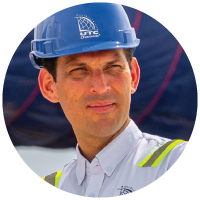
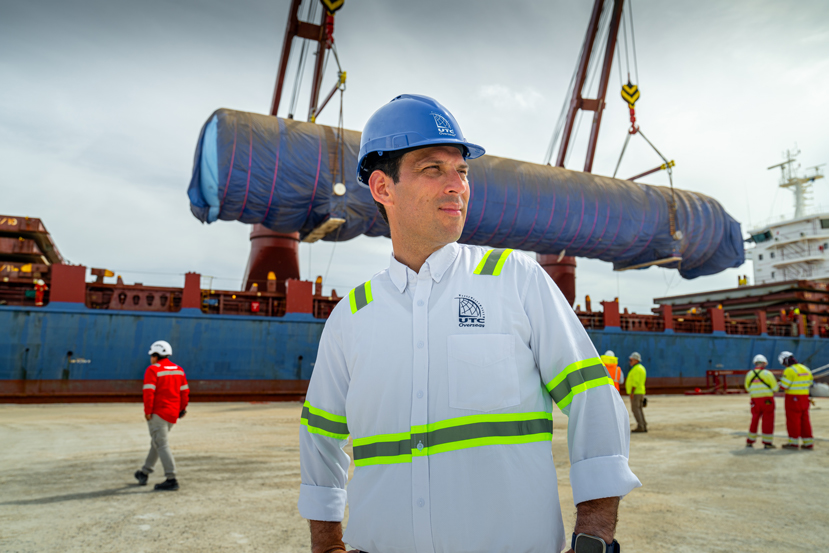
Mr. Ignacio Benedetti
Regional Director – Latin America & Caribbean
What can you tell our readers about the history and background of UTC overall and UTC in Latin America?
UTC Overseas has a long history in international transportation and logistics, with roots dating back to 1925. Since the establishment of our modern project logistics organization in 1989, UTC has developed into a global company supporting complex industrial projects across six continents.
Latin America and the Caribbean are strategically important markets for UTC, particularly in energy, mining, power generation, and infrastructure.
Having previously led our Colombian operations, I learned that successful project logistics requires strong local market knowledge supported by the technical expertise and resources of a global organization.
Today, we continue strengthening our regional presence while maintaining the entrepreneurial culture and customer focus that distinguish UTC.

What are UTC’s main strengths as a project freight forwarder?
Many companies call themselves project logistics specialists, but there is a significant difference between arranging transportation and developing an engineered logistics solution.
At UTC, our strengths are engineering expertise, operational execution, local knowledge, and accountability.
A recent example is our Excellence in Engineering Award at the Heavy Lift Awards in London in October 2026, recognizing our Poland team’s extraordinary transportation of massive LPG tanks along the Vistula River. Facing historically low water levels, our engineers developed innovative buoyancy solutions to overcome severe navigational restrictions.
This engineering expertise supports our projects worldwide, including a complex LNG and power generation development in the Bahamas and Dominican Republic, where collaboration with our engineering teams has been essential in evaluating port limitations, heavy-lift arrangements, and specialized transportation solutions.
Global engineering capabilities combined with local execution provide our customers with greater confidence, reliability, and predictability.
Ultimately, our customers don’t simply hire us to move cargo. They trust us to solve problems and deliver results.

Could you elaborate on UTC’s current Latin America presence and whom to contact?
Our regional operations include Mexico, Brasil, Guyana, Colombia, Ecuador, Peru, Chile, Bolivia, and the Dominican Republic, together with our recent expansion into Suriname, Argentina and Venezuela, strengthening our presence in key energy and industrial markets.
However, our strength is not simply having offices across the region, but how effectively our teams collaborate.
In September 2026, our Latin American leadership teams gathered in Mexico to align regional strategies, strengthen cooperation on global and regional accounts, and identify opportunities to jointly serve customers operating across multiple countries.
This reflects our operating philosophy: local entrepreneurial leadership, coordinated regional collaboration, and the support of UTC’s global network.
Each office contributes its market knowledge and operational expertise, while our global organization provides engineering capabilities, industry specialization, and international reach.
This approach allows us to deliver consistent, reliable solutions while remaining responsive to local requirements.
For inquiries throughout the region, readers are welcome to contact me directly, and I will connect them with the appropriate local management team.

Some shipping lines would like to eliminate the project freight forwarder. What is your view?
If a freight forwarder’s role is simply purchasing and reselling ocean freight, shipping lines can certainly compete directly.
However, project logistics is much more than booking space on a vessel.
Our responsibility is coordinating the entire logistics chain, including engineering, specialized transportation, port operations, customs, heavy lifting, and delivery to the final construction site.
A shipping line provides an essential part of that solution, but our responsibility is to integrate all the components into a safe, efficient, and reliable operation.
We consider shipping lines essential partners rather than competitors.
Our response to this trend is to continue moving up the value chain through engineering, technical expertise, risk management, and closer integration with our customers.
The future belongs to logistics providers that deliver measurable value beyond transportation rates.
Could you share some examples of recent projects in South America and the Caribbean?
Certainly. Our teams have been involved in several complex energy and industrial projects.
Bahamas – LNG and Power Generation
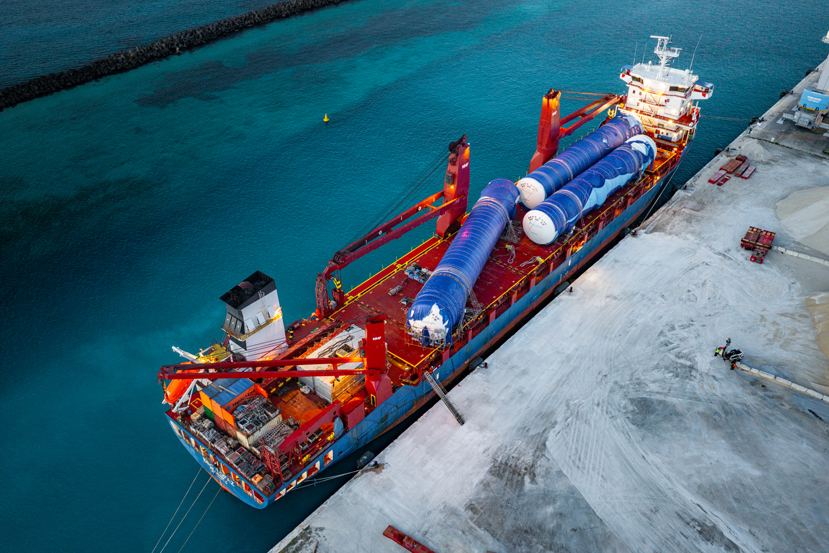
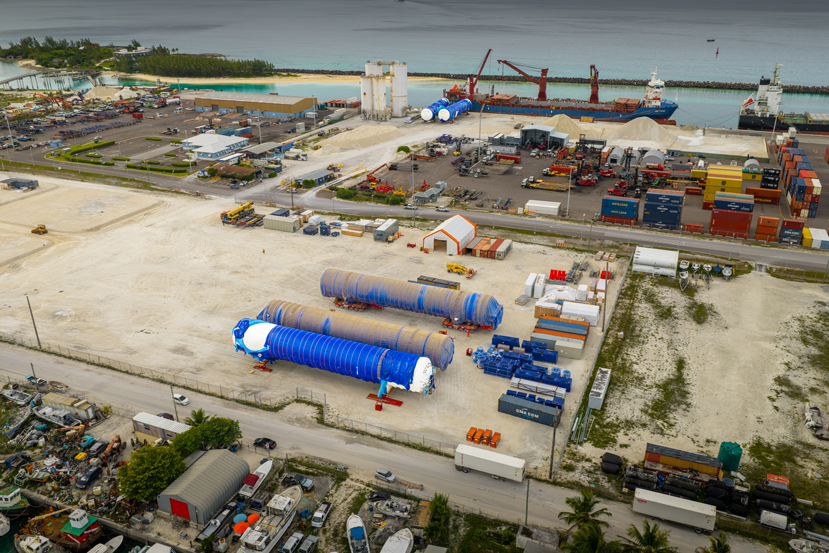
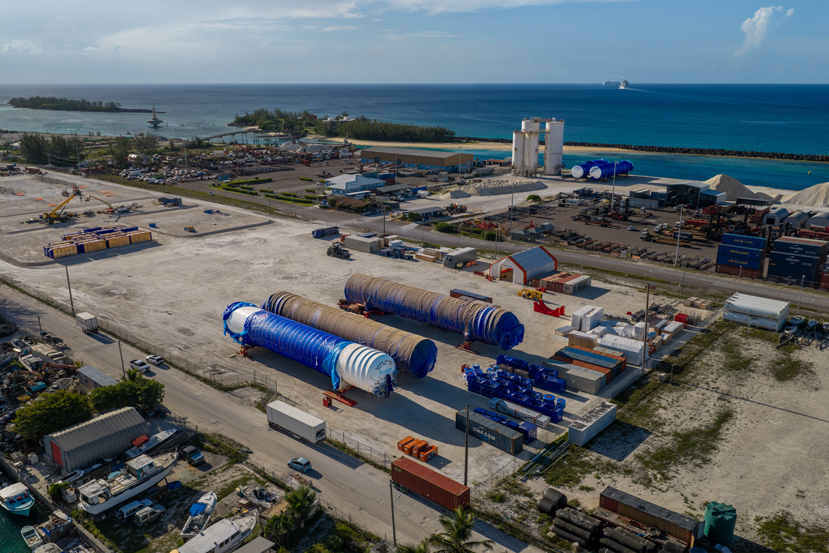
We are supporting a major LNG and power generation development involving ten LNG storage tanks of approximately 1,500 m³ each, alongside turbines, generators, transformers, and associated equipment.
The project requires specialized marine transportation, heavy-lift operations, and extensive engineering coordination to overcome local infrastructure limitations.
Our collaboration with UTC’s global engineering team has been fundamental in developing technically feasible and reliable transportation solutions.
Dominican Republic – Power Generation
We have been involved in major power generation projects requiring the transportation of gas turbines, generators, HRSGs, and large transformers, including individual components exceeding 320 tons.
These operations demand specialized vessel discharge, barge transport into temporary quays, modular trailers, and close coordination with EPC contractors to integrate transportation with construction schedules.
Colombia – Industrial Plant Relocation | Colombia to Ecuador
Our Colombian team, working closely with UTC Ecuador, recently coordinated the door-to-door relocation of industrial equipment for a vegetable oil processing facility from Colombia to Ecuador.
Beyond transportation, our team provided hands-on local supervision, close communication with surrounding communities, and coordination of regional contractors and specialized service providers to support equipment dismantling, handling, and preparation for shipment.
The project demonstrates how local expertise, strong vendor relationships, and seamless collaboration between UTC offices enable us to execute complex industrial relocations safely and efficiently.
Across these projects, our common strength is combining global engineering expertise with local operational execution.
How does UTC find and develop the right talent?
People remain our greatest competitive advantage.
Technical expertise is important, but I personally place equal emphasis on attitude, commitment, professionalism, and discipline.
We look for individuals with an entrepreneurial mindset, strong customer service orientation, and a genuine sense of ownership and accountability.
Our objective is to develop leaders, not simply fill positions.
We encourage collaboration and knowledge sharing across our global organization, allowing our people to learn from different markets and complex projects.
Technology and artificial intelligence will increasingly support our teams by improving efficiency and reducing repetitive tasks, but they cannot replace professional judgment, integrity, or personal relationships.
We want our people to think like business owners, act as leaders, and take pride in delivering results for our customers.
Looking toward 2027, where do you see the greatest opportunities in Latin America?
I see significant opportunities in three main sectors.
First, Battery Energy Storage Systems (BESS). Energy storage is becoming essential for grid stability and renewable integration throughout Latin America, with particularly strong potential in Mexico.
Recognizing this growing market, UTC has established a dedicated Global BESS Group, combining specialized industry knowledge with our regional execution capabilities.
Second, Oil & Gas. We see considerable potential in Argentina and Venezuela, where UTC has recently opened operations.
These new offices strengthen our ability to support global energy customers already active in the United States, Guyana, Brazil, and Colombia, creating opportunities for coordinated logistics solutions throughout the Americas.
Third, Power Generation and Infrastructure. The Caribbean continues to present opportunities in LNG, power plants, substations, and electrical grid modernization, while South America remains attractive for mining, energy, and industrial investment.
An important part of our strategy is ensuring these opportunities are approached regionally rather than as isolated country initiatives.
Our September Latin American leadership meeting in Mexico reinforced this commitment to shared commercial priorities, collaboration on global accounts, and coordinated project execution.
Our strategy is simple: follow our customers, strengthen our presence in growing markets, develop specialized expertise, and leverage our global network to deliver reliable local execution.
How can readers get in touch with you?
I am always pleased to connect with EPC contractors, project developers, equipment manufacturers, and logistics partners interested in Latin America and the Caribbean.
Our industry is built on relationships, trust, and cooperation, and we welcome opportunities to develop long-term partnerships.
Ignacio Benedetti
Regional Director – Latin America & Caribbean
Global Accounts Manager
UTC Overseas, Inc.
Email: i.benedetti@utcoverseas.com
Mobile / WhatsApp: +1 786 620 1829
Website: www.utcoverseas.com